
Since returning to office, Donald Trump, now the sitting President of the United States, has revived a familiar but controversial style of diplomacy—public pressure and open threats, not just toward rivals but toward America’s closest allies.
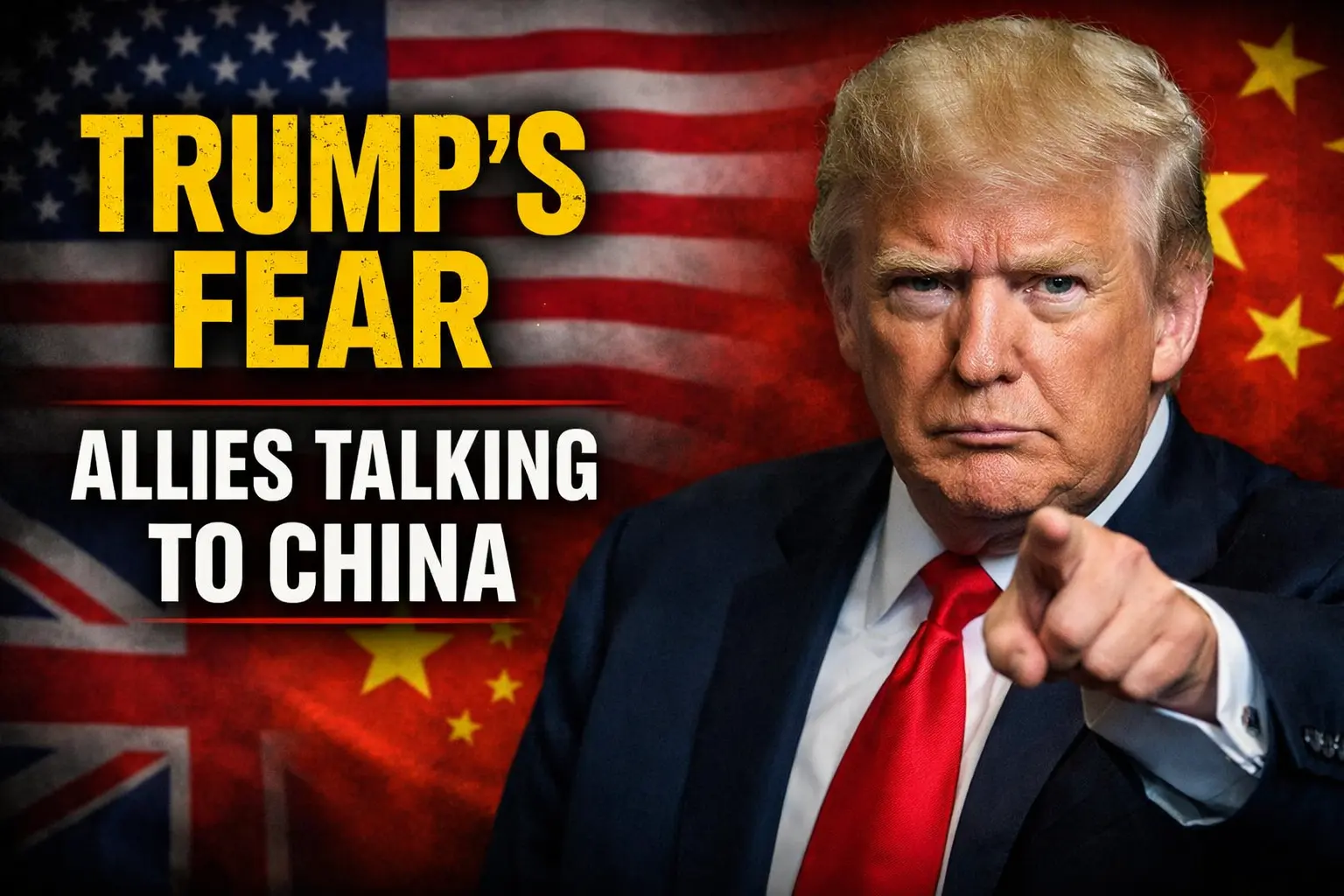
His sharp reactions to the UK prime minister’s engagement with China’s leadership, following earlier confrontations with Canada, have raised a pressing question across diplomatic circles: why does Trump react so aggressively when allies talk to Beijing? And more importantly, what does Trump actually fear?
The answers lie not in emotion, but in Trump’s unique understanding of power, loyalty, and global order.
Trump’s Worldview: Loyalty Over Diplomacy
President Trump does not approach foreign policy as a traditional diplomat. He views international relations as a transactional system, where benefits are exchanged for loyalty.
In Trump’s worldview:
•The United States provides security, market access, and global influence.
•Allies are expected to align politically and strategically.
•Independent diplomacy—especially with rivals—is seen as disobedience.
So when the UK or Canada engages China at senior political levels, Trump does not see “normal diplomacy.” He sees erosion of discipline within the alliance system.
To him, allies don’t merely cooperate—they are expected to coordinate strictly under U.S. leadership.
China: The Core Strategic Obsession
China occupies a central place in Trump’s strategic thinking. Unlike past administrations that balanced competition with engagement, Trump treats China as a comprehensive challenger—economic, technological, military, and ideological.
His China strategy rests on three core assumptions:
1.Maximum pressure forces concessions.
2.Western unity is essential to restrain Beijing.
3.Any ally engaging China weakens U.S. leverage.
When allies talk to China independently, Trump believes they:
•legitimize Beijing diplomatically,
•soften the impact of U.S. pressure,
•and signal division within the Western bloc.
From Trump’s perspective, even symbolic meetings matter. Optics are leverage, and leverage is power.
Why the UK and Canada Trigger Strong Reactions
Trump’s confrontations with the UK and Canada are not random. These countries matter disproportionately because they are pillars of the U.S.-led order.
•Canada is America’s largest trading partner and closest geographic ally.
•The UK is Washington’s most trusted political, military, and intelligence partner.
If these countries act independently on China, Trump worries about a domino effect:
•Europe feels freer to engage Beijing.
•Smaller allies begin hedging.
•U.S. pressure loses coherence.
In short, if discipline breaks at the top, it collapses everywhere else.
Public Threats as Strategy, Not Temper
Trump’s critics often interpret his rhetoric as impulsive or emotional. In reality, his public threats are deliberate negotiating tools.
Trump believes:
•Private diplomacy hides weakness.
•Public pressure creates urgency.
•Fear accelerates compliance.
By openly warning allies—through media statements, trade threats, or political ridicule—Trump aims to shape behavior beyond the immediate target. One ally pressured publicly becomes a message to all.
This is diplomacy by deterrence and intimidation, not reassurance.
The Real Fear: Loss of Control, Not Loss of Power
Trump does not fear China overtaking the United States tomorrow. What he fears more is loss of control over the global system.
Specifically, Trump is deeply uncomfortable with:
•a multipolar world,
•autonomous allies,
•and negotiated influence rather than commanded obedience.
In a multipolar order:
•allies balance relationships,
•power is shared and contested,
•and Washington must persuade rather than dictate.
Trump rejects this reality. His “America First” doctrine depends on hierarchy, not balance. When allies talk to China freely, it signals that hierarchy is weakening.
That—not China alone—is the real threat.
A Sharp Break from Traditional U.S. Diplomacy
For decades, U.S. administrations tolerated limited ally engagement with rivals, believing dialogue reduced escalation and preserved influence.
Trump sees it differently.
To him:
•engagement equals concession,
•dialogue equals legitimacy,
•legitimacy weakens pressure.
This marks a fundamental shift from post–Cold War diplomacy. Trump replaces subtle influence with visible coercion, believing clarity and strength matter more than nuance.
The Strategic Cost of Pressuring Allies
While Trump’s approach may yield short-term compliance, it carries long-term risks.
Allies under constant pressure begin to:
•question U.S. reliability,
•diversify partnerships,
•quietly build alternatives.
Ironically, this accelerates the very behavior Trump fears—strategic autonomy.
China understands this dynamic well. By contrasting U.S. pressure with calm engagement, Beijing positions itself as patient and predictable, while Washington appears volatile.
Conclusion: Leadership Needs Trust, Not Just Power
President Trump’s problem with allies meeting China is not about meetings themselves. It is about control over the global narrative and alliance behavior.
He fears a world where:
•allies choose rather than obey,
•diplomacy is balanced, not binary,
•and U.S. leadership is negotiated, not assumed.
By threatening friends as harshly as rivals, Trump reveals a core tension in his strategy: power without trust is fragile.
In the long run, alliances survive not because they are intimidated, but because they believe in shared purpose. And once trust erodes, no amount of pressure can fully restore