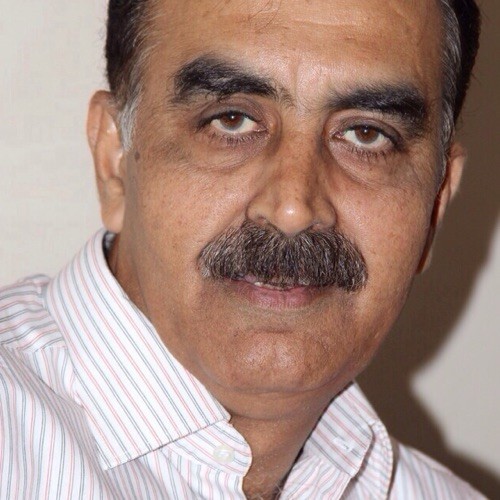
I proudly call myself a Publican. I joined Divisional Public School, Model Town, Lahore, in 1972 and completed my matriculation in 1981. Those nine years remain among the most formative and cherished years of my life.
I still remember a bright sunny day in 1981 when I met our respected Principal, Mr. Abdul Aleem Quraishi, to request a Hope Certificate for applying to the Pakistan Military Academy (JC-11). That moment reflected the confidence, discipline, and aspiration the institution instilled in its students.
At that time, Divisional Public School stood among Lahore’s leading English-medium institutions. It was often mentioned alongside the most prestigious schools of the city — recognition earned through academic excellence, strong leadership, and a vibrant extracurricular culture.
The school was known for:
•Outstanding academic standards
•Dedicated and hardworking teachers
•Expansive sports facilities
•Strong emphasis on extracurricular activities
•Consistently excellent board results
It was more than an institution; it was a cradle of character, leadership, and discipline.
The Gradual Decline: Key Contributing Factors
Institutions rarely deteriorate overnight. Decline is usually the result of structural and administrative missteps.
1. Appointment of Outside Principals
One major factor was the appointment of outside principals unfamiliar with the school’s culture and internal dynamics. Institutional leadership requires not only credentials but contextual understanding.
In certain instances, opportunistic elements surrounded the principal, influencing decisions and distorting priorities. Administrative balance weakened, and internal harmony suffered.
2. Operational Interference by the Board
A concerning development occurred when members of the Board of Governors began sitting within the school premises and intervening in day-to-day operational matters.
A board’s role is strategic — policy direction, financial oversight, and long-term planning — not routine administrative control. When strategic bodies enter operational space, institutional discipline becomes blurred.
Concerns were also raised when some board members facilitated admissions for close associates, creating perceptions of favoritism. Even such perceptions can damage institutional credibility.
3. Excessive Interference from the Commissioner’s Office
Unnecessary interference by employees of the Commissioner’s Office further disrupted administrative autonomy. Oversight is essential — overreach is harmful.
Educational institutions thrive when governance structures are clearly defined and respected. When lines of authority blur, confusion and demoralization follow.
The Role of the Publican Society
Throughout these challenging years, the Publican Society and alumni played a constructive and principled role. They consistently highlighted administrative shortcomings and overreach before successive commissioners.
In several instances, their advocacy led to the reconsideration and reversal of questionable decisions. Their engagement demonstrated that alumni are committed stakeholders in preserving the school’s legacy.
Such responsible participation reflects the very values Divisional Public School once instilled — courage, accountability, and institutional loyalty.
Signs of Corrective Action
Encouragingly, the current Commissioner of Lahore has taken certain long-awaited steps that had previously been highlighted by the Publican Society and alumni to earlier administrations. These measures indicate seriousness toward restoring administrative balance.
However, for meaningful and lasting reform, further steps are essential:
•A comprehensive financial audit of the school must be conducted to ensure transparency and accountability. If any financial irregularities are identified, responsible individuals should be held accountable in accordance with rules and regulations.
•The Commissioner should directly address the teaching faculty, listen to their concerns, and restore morale. Teachers are the backbone of the institution, and without their confidence and stability, academic standards cannot improve.
•Focused measures must be introduced to reverse the deterioration in academic results and restore the school’s academic reputation.
•A formal meeting with the Publican Society and alumni representatives should be held to understand ground realities and benefit from their institutional memory and insights.
I remain confident that timely, transparent, and balanced actions will produce positive results in the days ahead.
The Way Forward: Reviving the Legacy
For Divisional Public School to reclaim its former stature, the following reforms are essential:
1. Leadership from Within
Preference should be given to appointing principals from experienced senior staff who understand the school’s culture and history.
2. Clear Governance Boundaries
The Board of Governors must focus on strategic direction rather than operational interference.
3. Institutional Autonomy
The Commissioner’s Office should maintain oversight without disrupting academic administration.
4. Merit-Based Decisions
All appointments, admissions, and promotions must strictly adhere to transparency and merit.
5. Teacher Empowerment
Teachers’ morale and professional dignity must be restored.
6. Revival of Holistic Education
Sports, debating societies, clubs, and extracurricular excellence must once again become central pillars of the institution.
Conclusion
Divisional Public School was built on vision, discipline, and excellence. Its decline was gradual — shaped by leadership discontinuity, governance overreach, and erosion of institutional boundaries.
Yet institutions with strong foundations can rise again.
For those of us who proudly call ourselves Publicans, revival is not merely about restoring rankings — it is about restoring integrity, identity, and legacy.
With balanced governance, principled leadership, transparency, and collective commitment, Divisional Public School can once again stand among Lahore’s most respected institutions.