When Was the Catholic Church Founded? Timeline Guide
Many people search for a specific founding date. The answer depends on how we define the Church.
Around 30 to 33 AD
Jesus begins His ministry and gathers disciples.
Around 33 AD
Pentecost takes place. Catholics consider this the spiritual birth of the Church.
First and second centuries
Christian communities spread throughout the Roman Empire. The Church structure develops with bishops leading major cities such as Rome, Antioch, and Alexandria.
313 AD
The Edict of Milan legalizes Christianity in the Roman Empire. This allowed the Church to operate openly.
380 AD
Christianity becomes the official religion of the Roman Empire.
1054 AD
The Great Schism separates the Eastern Orthodox Church and the Roman Catholic Church.
From this timeline, we see that Christianity began in the first century, but the Roman Catholic identity became clearer over time, especially after divisions with Eastern Christianity.
Development Through the Middle Ages
During the Middle Ages, the Catholic Church became deeply connected to European society. Monasteries preserved education and culture. Cathedrals were built across Europe. The Pope’s authority grew stronger, especially in Western Europe.
At the same time, conflicts emerged. Disputes over authority led to the separation between Eastern Orthodox Christianity and Roman Catholicism. Later, in the sixteenth century, the Protestant Reformation challenged Catholic teachings and authority. In response, the Catholic Church held the Council of Trent, which clarified doctrine and reformed internal practices.
This period shaped the Catholic Church’s theology, sacraments, and global missionary work.
How Many Cardinals Are in the Catholic Church?
Another common question is about Church leadership. Cardinals are senior church officials appointed by the Pope. Their main responsibility is to elect a new Pope during a conclave.
The number of cardinals changes over time because new ones are appointed and others pass away. In recent years, there have been slightly over two hundred cardinals worldwide, though only those under the age of eighty can vote in a papal election.
Cardinals come from different countries, reflecting the global nature of the Catholic Church today. This shows how the Church has moved far beyond its European roots into Africa, Asia, and Latin America.
What Is Confirmation in the Catholic Church?
Confirmation is one of the seven sacraments of the Catholic Church. It is closely connected to baptism.
In baptism, a person becomes a member of the Christian community. In confirmation, the individual publicly affirms their faith and receives the strengthening of the Holy Spirit.
I once attended a confirmation ceremony, and what struck me most was the seriousness of the moment. Young people stood before the bishop and confirmed their commitment to live according to Christian teaching. It showed that Catholicism is not only about history and structure but also about personal faith and responsibility.
Catholic Church and Christianity
Some people ask what is the difference between Christianity and the Catholic Church. Christianity is the broader religion based on the life and teachings of Jesus Christ. The Catholic Church is the largest Christian denomination within that broader faith.
Other Christian groups include Orthodox Churches and Protestant denominations. All share belief in Jesus Christ, but they differ in church authority, sacraments, and certain theological teachings.
Catholicism Today
Today, the Catholic Church is one of the largest Christian bodies in the world, with more than one billion members globally. It operates schools, hospitals, charities, and missionary organizations. The Pope leads the Church from Vatican City.
Despite modern challenges, debates, and internal reforms, the Church continues to describe itself as the same community founded by Jesus Christ and guided through history by apostolic succession.
Final Thoughts
So, who founded the Catholic Church?
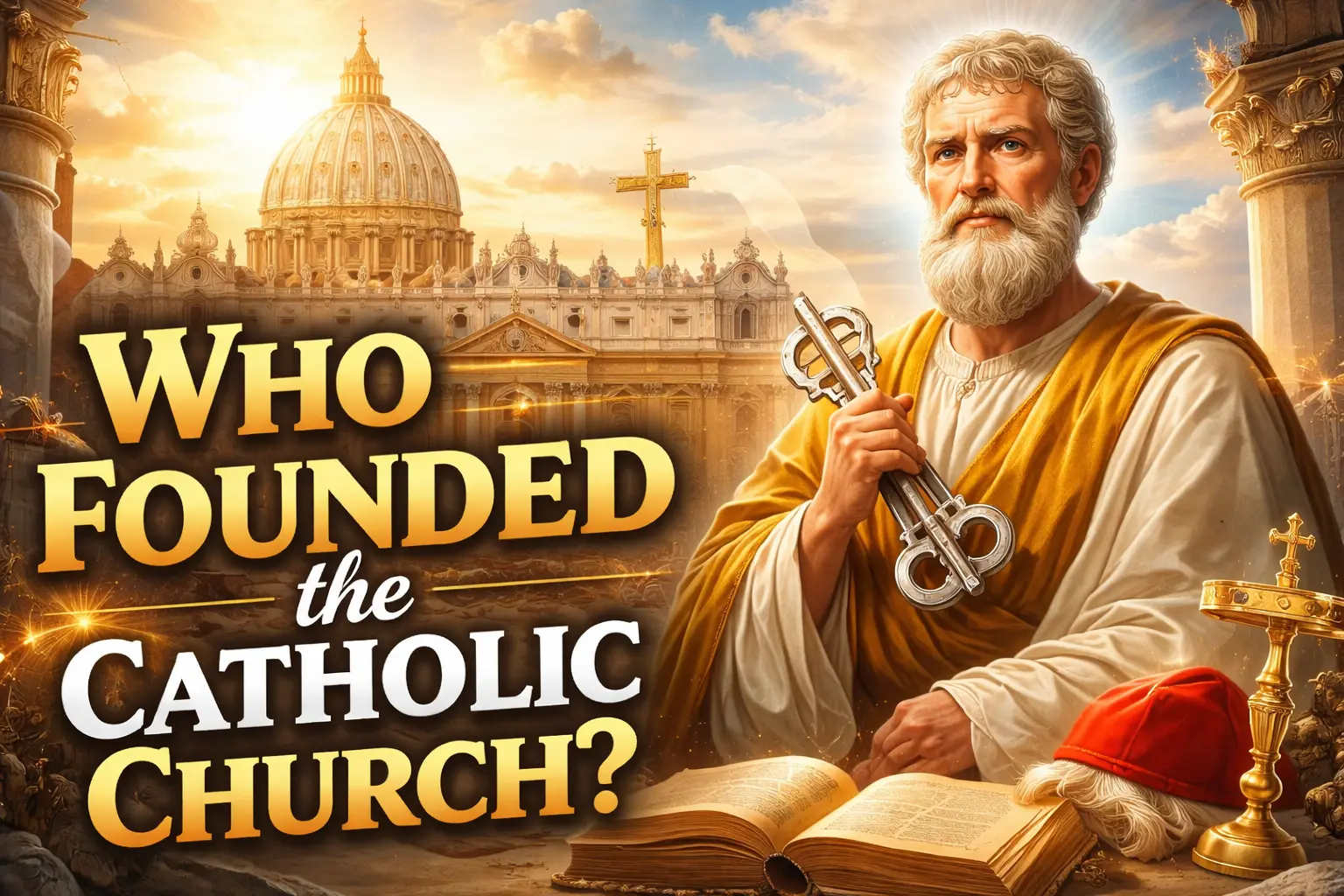
From the Catholic point of view, it was founded by Jesus Christ in the first century, with Saint Peter playing a foundational leadership role. From a historical perspective, the Church developed gradually from early Christian communities into the structured institution we recognize today.
The real story is not about a single political event. It is about faith, leadership, persecution, reform, and global expansion over two thousand years.
Understanding this history helps us see that the Catholic Church is both ancient and evolving, rooted in early Christianity yet shaped by centuries of human experience.