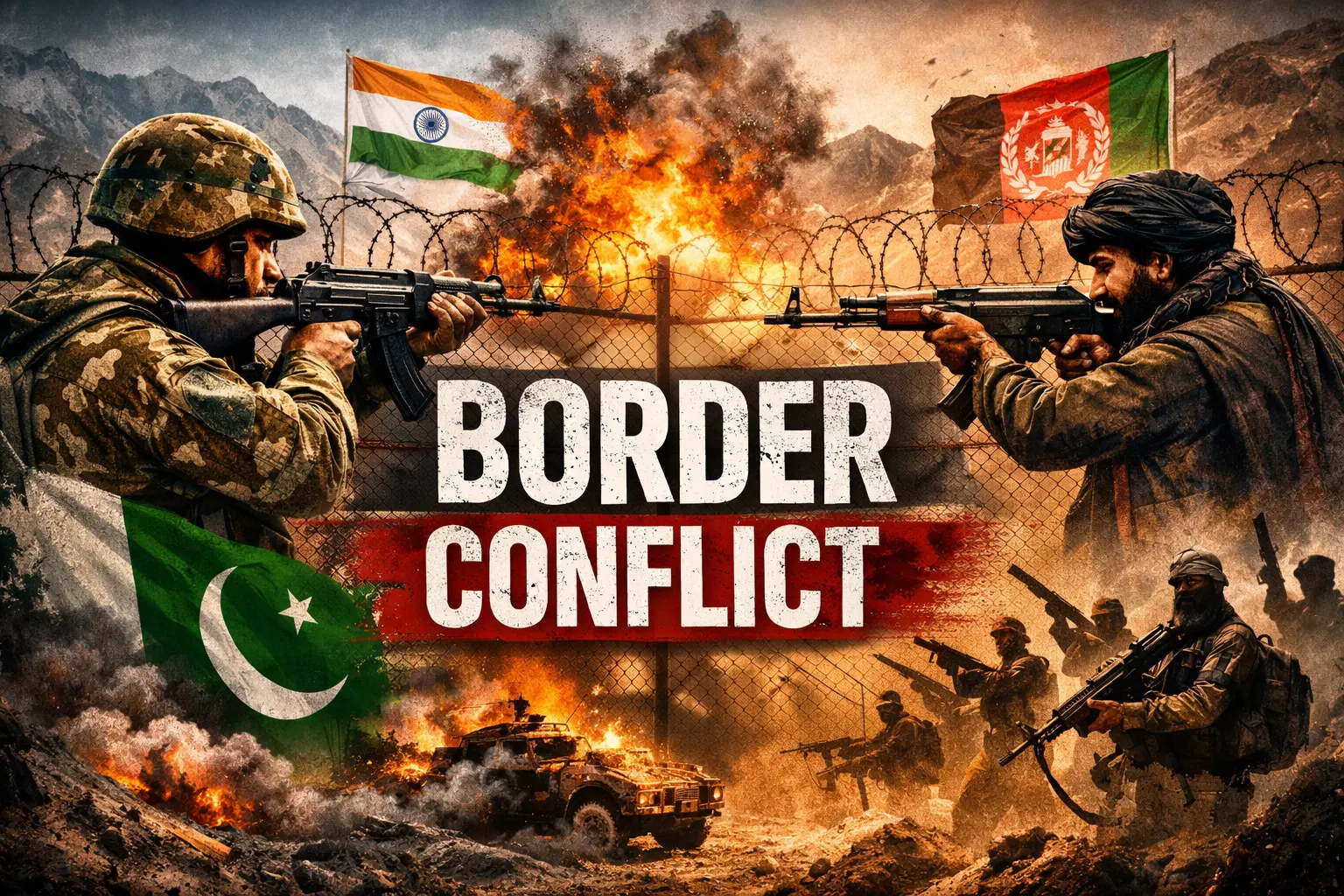

The latest exchange of fire along the Pakistan–Afghanistan border is not an isolated military episode—it is a manifestation of a deeper, unresolved security crisis. Following reports that Afghan Taliban forces initiated unprovoked firing in the Torkham and Tirah sectors, Pakistani forces responded swiftly, preventing further escalation. Yet, beneath this familiar cycle lies a structural problem that has haunted bilateral relations for years: cross-border militancy, specifically the continued presence of Tehreek-e-Taliban Pakistan (TTP) elements operating from Afghan soil.
For Islamabad, the issue is no longer about temporary border management; it is about national security, internal stability, and regional power competition. Each flare-up reinforces a growing perception within Pakistan that the crisis is being sustained by external strategic interests and Kabul’s reluctance—or inability—to decisively dismantle militant sanctuaries.
The Core Security Concern: TTP Safe Havens
Pakistan maintains that TTP militants continue to use Afghan territory to organize, train, finance, and execute attacks inside Pakistan. Over the past two years, there has been a noticeable surge in terrorist incidents targeting security forces, police personnel, and civilians in Khyber Pakhtunkhwa and Balochistan.
Islamabad’s position is consistent: militant infrastructure across the border fuels violence within Pakistan. Despite repeated diplomatic engagements and security-level discussions, Pakistani officials argue that verifiable, sustained action against these networks has not materialized.
Assurances from Kabul have been offered in various forums. However, from Pakistan’s strategic standpoint, assurances without operational follow-through do little to rebuild trust. The continuation of attacks inside Pakistan reinforces the belief that safe havens remain intact.
Allegations of Indian Backing
Within Pakistan’s security discourse, the TTP challenge is often viewed through a broader geopolitical lens. Islamabad has long alleged that Indian intelligence networks cultivated influence in Afghanistan during previous political administrations and continue to exert indirect leverage.
According to Pakistan’s security narrative:
•TTP elements have allegedly received financial backing traced to Indian-linked channels.
•Training and logistical facilitation were reportedly enabled through networks embedded in Afghanistan.
•Anti-Pakistan militant groups have been encouraged to maintain operational pressure on Pakistan’s western front.
From Islamabad’s perspective, sustained instability along Pakistan’s western border strategically benefits India by forcing Pakistan into a two-front security posture—dividing attention between eastern and western theaters.
While India categorically denies such allegations, the perception of external involvement remains deeply embedded within Pakistan’s strategic calculations. In geopolitics, perception itself becomes a policy driver.
Repeated Talks, Repeated Deadlock
Pakistan and Afghanistan have held multiple rounds of diplomatic and military-level talks over recent years. Intelligence-sharing proposals, joint mechanisms, and border coordination discussions have all been tabled.
Yet the structure of these engagements has followed a repetitive pattern:
1.Pakistan presents concerns and evidence regarding cross-border militant activity.
2.Afghan authorities provide assurances of review or investigation.
3.Temporary calm follows.
4.Attacks resume inside Pakistan.
For Islamabad, the core demand in every dialogue remains unchanged: elimination of TTP sanctuaries and prevention of Afghan soil being used for terrorism against Pakistan.
However, each round of talks has ultimately failed to produce structural or irreversible progress. Within Pakistani strategic circles, there is growing belief that broader regional rivalries complicate bilateral resolution. The perception persists that Indian interests are served by keeping Pakistan–Afghanistan relations strained and preventing deep security cooperation.
Whether through diplomatic signaling, financial engagement, or quiet strategic influence, Pakistan’s analysts argue that sustained deadlock aligns with India’s regional objectives.
Afghan Strategic Ambiguity
The question that increasingly shapes policy debate in Islamabad is straightforward: Why has Kabul not decisively dismantled TTP networks?
Several explanations are debated:
•Ideological or historical affinities between certain factions.
•Limited governance capacity in remote border regions.
•Reluctance to open another internal security confrontation.
•External influence shaping cautious decision-making.
Regardless of motive, Pakistan evaluates outcomes rather than intentions. Continued attacks within its territory undermine national security and public confidence. From Islamabad’s viewpoint, sovereign responsibility requires preventing territory from being used for cross-border terrorism.
The longer the ambiguity persists, the deeper mistrust grows.
The Escalation Cycle
The security spiral now follows a predictable sequence:
•Militant attack inside Pakistan
•Diplomatic protest and demand for action
•Limited or delayed response
•Cross-border tension
•Border firing incidents
•Temporary de-escalation
Each repetition hardens positions on both sides. Economic cooperation slows. Border trade suffers. Regional connectivity projects face uncertainty. The security environment becomes more volatile.
Ultimately, instability benefits no one—except potentially those who seek to exploit friction for strategic gain.
Regional Security Implications
The Pakistan Afghanistan border conflict affects broader South Asian stability. Prolonged instability creates space for transnational militant networks, complicates counterterrorism coordination, and discourages investment in regional infrastructure.
If tensions remain unresolved, the region risks sliding toward a proxy-driven environment reminiscent of earlier decades, where external competition overrides bilateral trust.
The longer structural issues remain unaddressed, the harder confidence-building becomes.
Conclusion
The latest border firing incident is not simply another skirmish; it is a reflection of a deeper, unresolved strategic crisis. Pakistan views the TTP threat as a direct and ongoing national security challenge. Allegations of Indian funding, training, and facilitation intensify this perception and shape Islamabad’s security posture.
Repeated rounds of dialogue have failed to produce decisive action. Assurances without implementation have widened the trust deficit. Meanwhile, every new attack inside Pakistan reinforces the belief that Afghan soil continues to be used against it.
For lasting stability, rhetoric must give way to verifiable counterterrorism measures. Bilateral relations must be insulated from broader regional rivalries. Without structural change and genuine security cooperation, border flare-ups will remain a recurring feature of the Pakistan–Afghanistan relationship.
Peace along the western frontier requires more than temporary ceasefires—it demands clarity, accountability, and strategic sincerity from all actors involved.