
The language of war shapes global perception
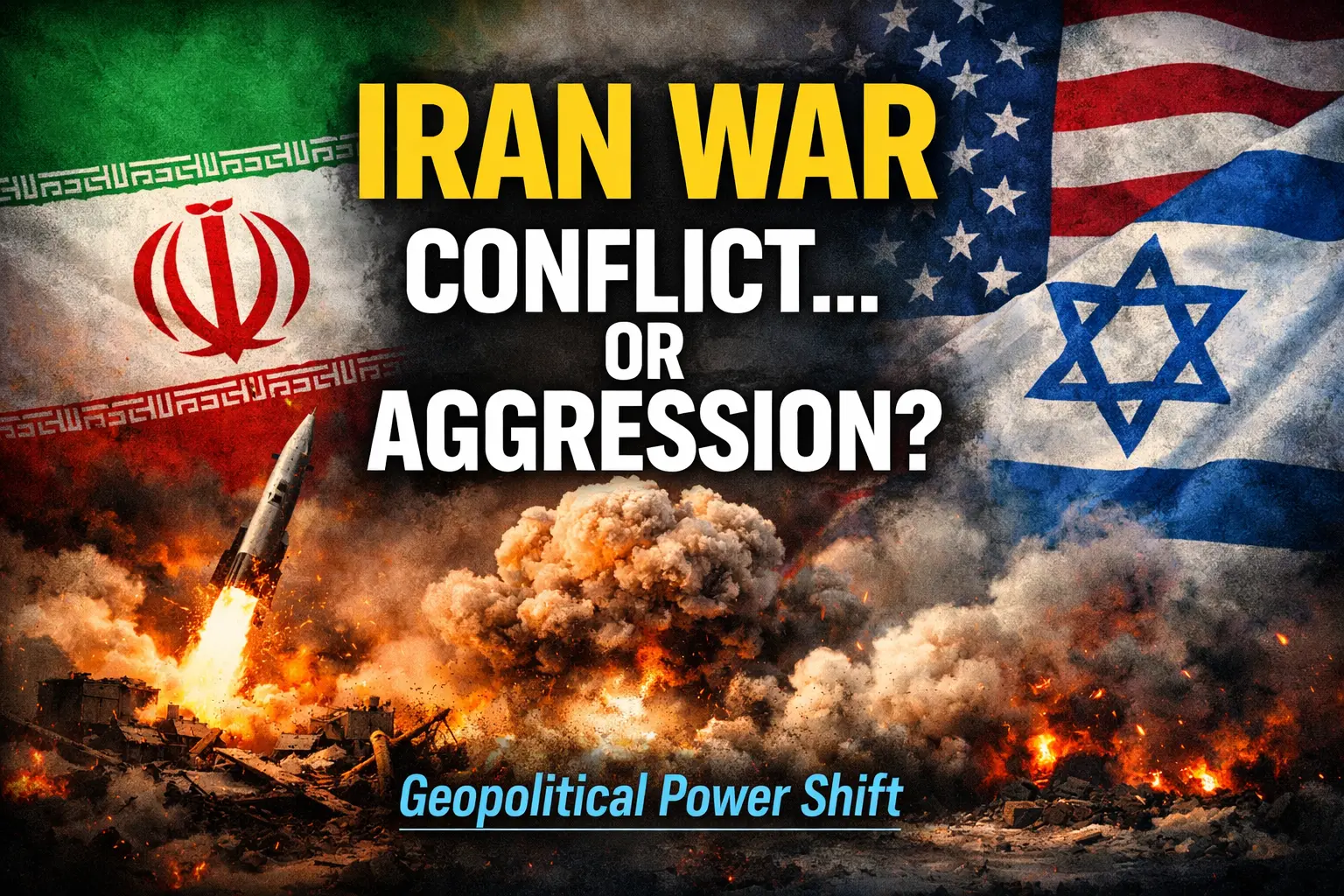
Some observers are describing the ongoing Iran war as a “conflict.” At first glance, the term may appear neutral. Yet the language used to describe wars often shapes how the world assigns responsibility, legitimacy, and moral authority.
Calling the current situation a “conflict” risks obscuring the deeper realities behind the unfolding events.
In diplomatic terminology, a conflict typically implies two sides entering hostilities under relatively comparable circumstances. What the world is witnessing in the Iran war, however, reportedly began with military strikes carried out by the United States and Israel against Iranian targets—strikes that occurred while Iran’s leadership was still engaged in diplomatic dialogue through mediation by a Gulf state.
Launching military attacks against a sovereign nation during ongoing diplomatic engagement is not conventional conflict management. Instead, it raises profound questions about aggression, international law, and the credibility of diplomatic processes.
Is the Iran War Really a “Conflict”?
Many analysts describe the Iran war as a conflict, implying that both sides entered hostilities under similar conditions. However, critics argue that this characterization may be misleading.
Reports suggest that the crisis escalated after military strikes by the United States and Israel against Iran while diplomatic engagement was still underway through regional mediation. If accurate, this sequence of events challenges the narrative that the war simply emerged from mutual escalation.
Understanding how the Iran war began is therefore essential to evaluating the legitimacy of the actions taken by all parties involved.
Iran and the Long Shadow of Sanctions
For decades, Iran has lived under extensive economic sanctions, political pressure, and diplomatic isolation. These measures have shaped Iran’s economy, limited its global trade access, and constrained its geopolitical options.
However, sanctions and political disputes do not provide moral or legal justification for military strikes against a sovereign state.
The international system was designed to prevent powerful nations from unilaterally imposing military outcomes on weaker or politically isolated states. If this principle erodes, the foundation of international stability becomes increasingly fragile.
No country regardless of its military strength or alliances should possess the unilateral authority to determine the sovereignty, security, or political future of another nation.
The Narrative of Escalation in the Iran War
Once Iran began responding militarily to defend its territory and strategic interests, the narrative surrounding the Iran war quickly shifted.
What began with strikes against Iran is now frequently described as Iranian “escalation.”
Yet the central question remains:
Who initiated the chain of events that led to the Iran war?
In modern geopolitical crises, the battle over narratives often becomes nearly as important as the battle on the ground. How a war is framed influences diplomatic alignments, public opinion, and historical interpretation.
Controlling the narrative can shape global perception of legitimacy and responsibility.
A Crisis of International Law and Sovereignty
The Iran war also highlights deeper structural tensions within the international system.
If a small group of powerful states effectively decides which countries may defend themselves and which must endure sanctions, pressure, or military strikes, then the principle of sovereign equality becomes increasingly fragile.
International law cannot remain credible if it applies selectively.
The rules governing war, diplomacy, and sovereignty must apply equally to all states—large or small, powerful or isolated. Otherwise, the global system risks evolving into a world where power alone determines legitimacy.
Such a system ultimately undermines the stability it claims to protect.
A Shifting Global Balance of Power
Beyond the immediate battlefield, the Iran war is accelerating broader geopolitical changes.
Many countries across Asia, the Middle East, and the broader Eastern sphere are increasingly coordinating politically, economically, and strategically. This trend reflects a growing desire among several states to reduce dependence on traditional Western power structures.
The Gulf region, in particular, is emerging as an increasingly influential geopolitical actor. Gulf nations are balancing relations with multiple global powers while strengthening regional partnerships.
These developments suggest that the Iran war may be part of a broader transformation in the global balance of power.
Timeline of the Iran War Crisis
Understanding the sequence of events helps clarify the broader geopolitical implications.
Key developments in the Iran war include:
•Diplomatic engagement reportedly underway through mediation by a Gulf state
•Military strikes launched against Iranian targets by the United States and Israel
•Iran responds with military actions in defense of its territory
•Regional tensions escalate across the Middle East
•International debate intensifies over sovereignty, escalation, and global power dynamics
This timeline illustrates why the framing of the Iran war as a simple “conflict” remains highly contested.
A Turning Point in the Global Order?
Rather than viewing the Iran war merely as another regional crisis, it may represent a deeper turning point in the evolving structure of global power.
Many nations are increasingly questioning whether the current international system reflects a fair balance of authority or whether it disproportionately favors a limited number of dominant states.
These debates are already reshaping diplomatic alignments, economic partnerships, and strategic planning across multiple regions.
The world may be entering a new era—one in which states seek a more balanced international system where sovereignty, security, and economic opportunity are not determined solely by traditional power hierarchies.
The Beginning of a New Chapter
History often shows that major geopolitical transformations emerge from moments of crisis.
The Iran war could ultimately become one of those defining moments. While the immediate consequences remain painful and destabilizing, the longer-term outcome may be a gradual restructuring of global power relationships.
From this transformation, the East and the Gulf region could emerge more strategically aligned, more independent in their policymaking, and potentially more prosperous through regional cooperation.
A new chapter in international politics may be beginning—one defined by regional stability, economic development, and a balance of power no longer dictated by the assumptions of the previous geopolitical order.
The final outcome remains uncertain.
But one reality is increasingly clear: the global order that shaped the past several decades is evolving, and the Iran war may prove to be one of the catalysts of that transformation.
Frequently Asked Questions
Who started the Iran war?
The origins of the Iran war remain widely debated. Critics argue that the crisis escalated after military strikes attributed to the United States and Israel against Iranian targets, while supporters of those actions describe them as preventive measures.
Why do some analysts say the Iran war is not a “conflict”?
Some analysts argue that describing the Iran war as a conflict creates the impression of equal engagement between parties, while the initial military actions were reportedly launched against Iran.
How could the Iran war affect global geopolitics?
The Iran war may accelerate shifts in the global balance of power, encouraging greater strategic coordination among Eastern and Gulf states while raising questions about the fairness of the current international system.