
A Landmark Moment for Pakistan
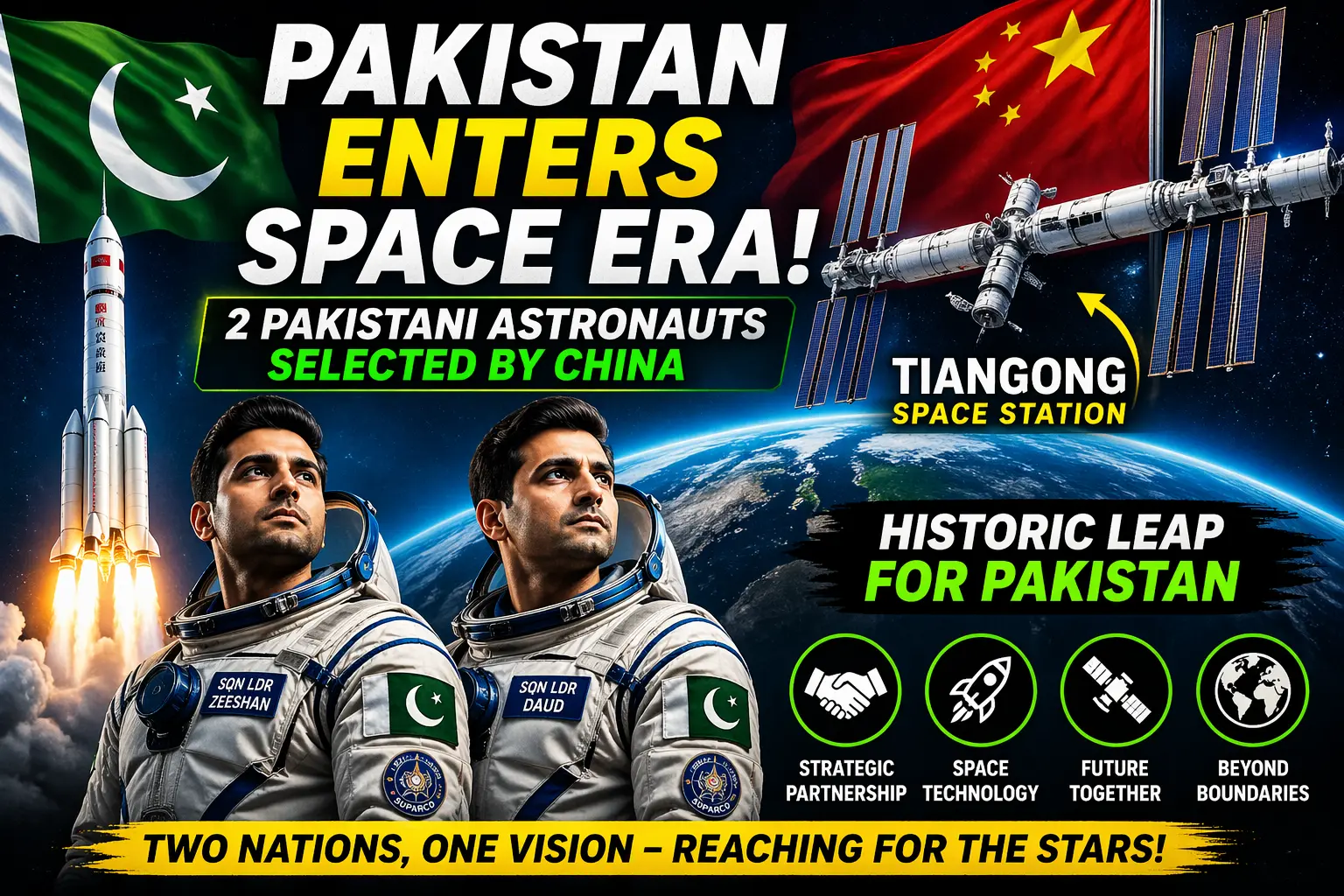
Pakistan has taken a significant step into the future of space exploration, marking a historic moment in its scientific and strategic journey. For the first time, two Pakistani nationals have been selected to undergo training under China’s human spaceflight program—an achievement that signals Pakistan’s entry into one of the most advanced and exclusive domains of modern technology.
Tiangong: The Gateway to Space Collaboration
At the center of this collaboration is the Tiangong Space Station, China’s flagship orbital platform that represents its growing capabilities in space science and engineering. Participation in such a program is not simply symbolic; it reflects a level of trust and cooperation that extends far beyond conventional partnerships.
Pakistan–China Strategic Trust
The inclusion of Pakistani astronauts highlights the strength of the long-standing relationship between Pakistan and China. Over the years, this partnership has evolved from economic and defense cooperation into high-tech sectors, including space technology and scientific research. This latest development demonstrates that the relationship is not only enduring but also forward-looking.
The Faces of a New Frontier
Among those selected are Squadron Leader Zeeshan and Squadron Leader Daud, who now represent Pakistan’s aspirations in the field of human spaceflight. Their training within China’s advanced astronaut program will prepare them for potential missions aboard the Tiangong space station. More importantly, they symbolize a new generation of professionals capable of operating at the highest levels of technological excellence.
Opportunities and Technological Gains
This collaboration is expected to bring multiple benefits to Pakistan. It offers exposure to advanced space systems, opportunities for scientific research in microgravity, and the development of highly skilled human capital. Institutions such as the SUPARCO stand to gain from this experience, strengthening Pakistan’s overall space capabilities.
Strategic and Global Implications
Beyond its technical aspects, this milestone carries strategic significance. It positions Pakistan as an emerging participant in the global space landscape and opens the door for future cooperation in satellite development, research missions, and other advanced aerospace initiatives. It also reflects a pragmatic approach—achieving progress through collaboration rather than competition.
Conclusion
Pakistan’s journey into space may be beginning through partnership, but it marks the start of a broader vision. As training progresses and opportunities expand, this step could lay the foundation for a more advanced and self-reliant space program in the years to come. From observing the stars to preparing to reach them, Pakistan has entered a new era—one defined by ambition, capability, and a clear direction toward the future.