
On 29 April 2026, far from the public spotlight, a quiet but powerful moment unfolded in Sanya.
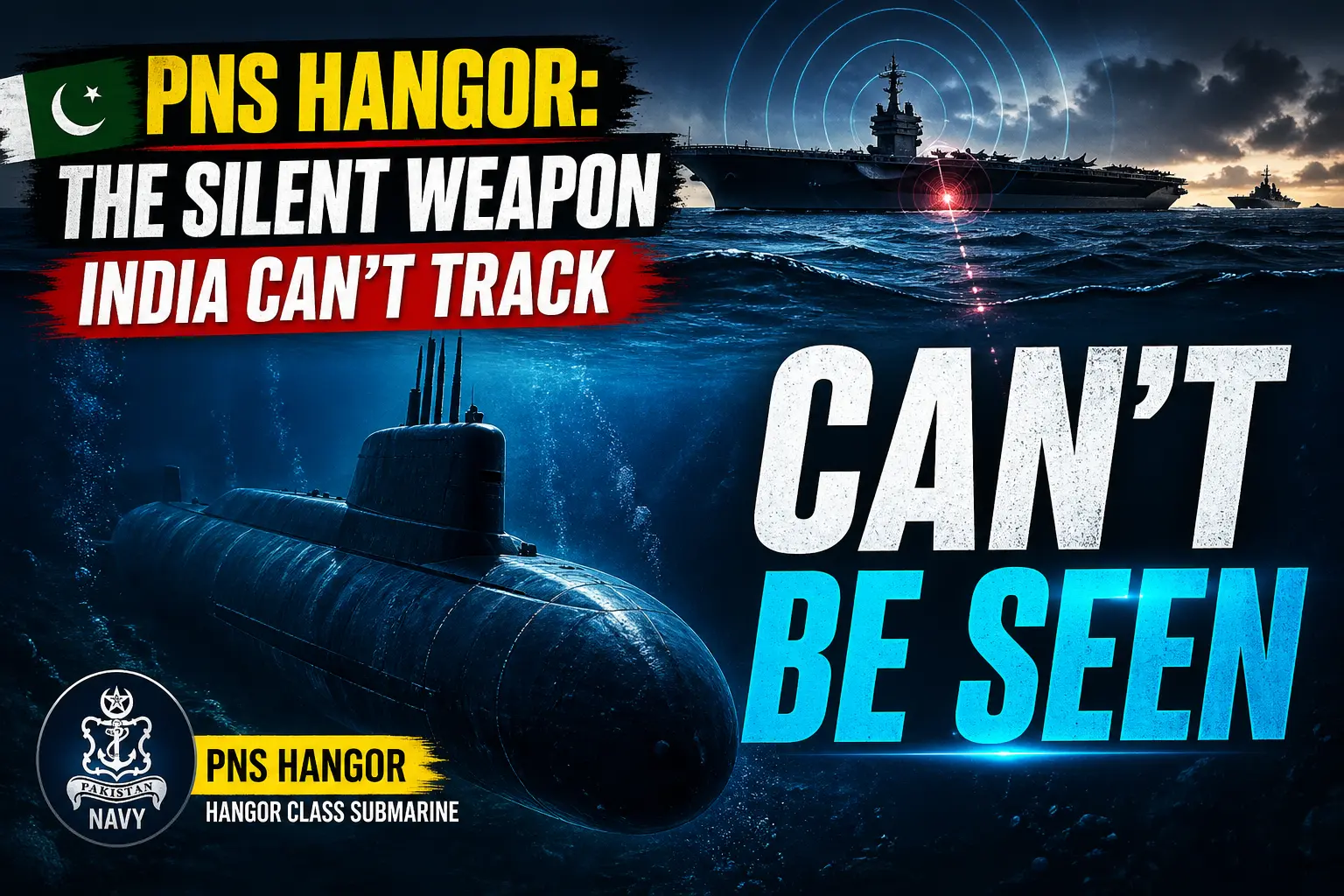
Pakistan commissioned its first Hangor-class submarine, PNS Hangor—a development that may not make loud headlines, but could reshape the strategic balance in the Indian Ocean Region for years to come.
The ceremony was attended by Asif Ali Zardari and Naval Chief Admiral Naveed Ashraf, but the real story lies beneath the surface—literally.
Why This Matters More Than It Seems
For the average observer, it’s just another submarine.
For military planners, it’s a shift in how wars are prevented.
Modern naval warfare is no longer about who has the biggest ships—it’s about who can remain invisible the longest. The Hangor-class submarines, derived from China’s Type 039B Yuan-class, are designed to do exactly that.
They can stay submerged for extended periods, move quietly, and strike without warning.
That changes everything.
From Watching the Sea to Controlling It
For years, Pakistan’s navy operated with limitations—focused largely on coastal defence.
But with PNS Hangor, the shift is clear:
👉 From defending waters
👉 To denying access to adversaries
This concept—sea denial—is one of the most effective strategies for smaller navies facing larger opponents.
And it’s highly relevant when viewed against India’s expanding naval ambitions.
A Direct Challenge to India’s Naval Strategy
India has invested heavily in high-visibility naval power, especially aircraft carriers like:
* INS Vikramaditya
* INS Vikrant
These platforms symbolize dominance—but they also come with a vulnerability:
They are visible. Trackable. Targetable.
Submarines like PNS Hangor are built for one purpose:
To quietly hunt what others rely on.
This introduces uncertainty into India’s naval planning—and uncertainty is the foundation of deterrence.
The Bigger Picture: Nuclear Deterrence at Sea
There’s another layer to this development—one that doesn’t get openly discussed.
Submarines provide the most survivable leg of a country’s nuclear deterrent.
If equipped with submarine-launched cruise missiles (SLCMs), platforms like Hangor can ensure:
* A second-strike capability
* Guaranteed retaliation
* Strategic stability in crisis
In simple terms:
Even if everything else is hit, this remains hidden—and ready.
China–Pakistan Partnership: Beyond Procurement
The fact that the commissioning took place in China is not incidental.
It reflects deepening defence cooperation between Pakistan and China.
This isn’t just about buying submarines—it’s about:
* Technology transfer
* Local production at Karachi Shipyard & Engineering Works
* Building long-term naval capability
In strategic terms, Pakistan is not just acquiring power—it is learning to sustain it.
The Psychological Impact: The War You Don’t See
Perhaps the most underrated aspect of this development is psychological.
Submarines don’t need to fire to be effective.
Their mere presence forces the opponent to:
* Spend more on anti-submarine warfare
* Recalculate deployment strategies
* Operate under constant uncertainty
In modern conflict, this is called cognitive pressure.
And PNS Hangor adds exactly that pressure into the regional equation.
Indian Ocean: A Quiet Contest Becoming Louder
The Indian Ocean Region is no longer a passive trade route—it is becoming a strategic arena.
With multiple powers operating in the region, including China and India, Pakistan’s induction of Hangor-class submarines ensures one thing:
It cannot be ignored.
Final Thought: Power That Doesn’t Announce Itself
The commissioning of PNS Hangor is not about spectacle.
There were no dramatic displays, no loud declarations.
But beneath the surface, a shift has occurred.
Because in today’s world, the most powerful weapons are not the ones you see
They are the ones you know are there… but cannot find.