(Structure, History, Teachings & Why It Matters Today)
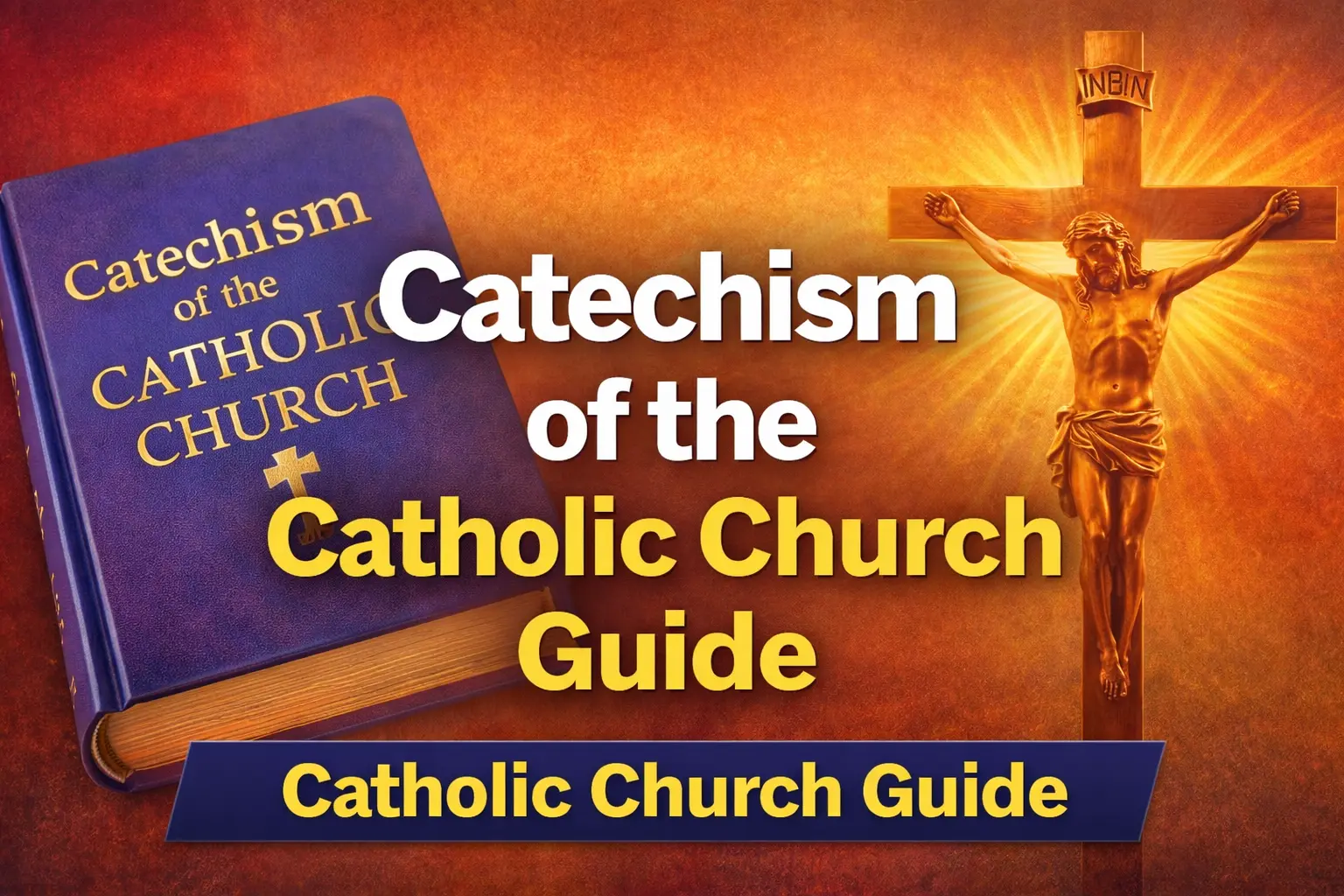
The Catechism of the Catholic Church (CCC) is one of the most important official documents of modern Catholicism. If you want to understand Catholic beliefs clearly not through opinion, but through the Church’s own teaching this is the book that explains it.
When I first opened the Catechism, I expected a simple question-and-answer booklet. Instead, I found a structured theological system carefully organized, detailed, and deeply connected to Scripture and Church tradition. It is not light reading. But it is powerful.
This guide explains what the Catechism is, why it was written, how it is structured, and what it actually teaches in simple English.
What Is the Catechism of the Catholic Church?
The Catechism of the Catholic Church is an official summary of Catholic doctrine. It explains what Catholics believe about:
-
God
-
Jesus Christ
-
The Church
-
The Sacraments
-
Morality
-
Prayer
-
Salvation
It was officially approved by Pope John Paul II in 1992 and later updated in 1997 with the official Latin edition.
It is not meant to replace the Bible. Instead, it explains how the Catholic Church interprets the Bible together with Sacred Tradition and Church authority (Magisterium).
That point is very important.
Unlike many Protestant traditions that follow “Scripture alone,” the Catechism reflects the Catholic belief that divine truth comes through:
-
Sacred Scripture
-
Apostolic Tradition
-
The teaching authority of the Church
Why Was the Catechism Written?
After the Second Vatican Council (1962–1965), the Catholic Church experienced global changes in liturgy, education, and theology. Church leaders felt the need for one clear, unified reference text.
In 1985, bishops requested a universal catechism that would:
-
Present Catholic doctrine clearly
-
Be faithful to tradition
-
Be suitable for modern Christians
-
Serve as a reference for local catechisms
The result was the Catechism of the Catholic Church.
It became known as “the Catechism of Vatican II” because it reflects the theological vision of that council.
How the Catechism Is Structured
Many competitor articles mention the Catechism but do not clearly explain its structure. This is where clarity matters.
The Catechism is divided into four major parts:
Part One: Profession of Faith
This section explains what Catholics believe.
It walks through the Apostles’ Creed line by line:
-
I believe in God the Father
-
I believe in Jesus Christ
-
I believe in the Holy Spirit
-
I believe in the Church
It covers topics like:
-
Creation
-
The Trinity
-
The Incarnation
-
The Resurrection
-
Heaven, Hell, and Purgatory
When I studied this section, I noticed how deeply systematic Catholic theology is. Every belief is connected to Scripture and centuries of Church tradition.
Part Two: The Celebration of the Christian Mystery
This part explains the seven sacraments:
-
Baptism
-
Confirmation
-
Eucharist
-
Confession (Penance)
-
Anointing of the Sick
-
Holy Orders
-
Matrimony
The Catechism describes the Eucharist as the “source and summit” of Christian life. That phrase alone explains how central the Mass is to Catholic worship.
This section also explains liturgy — why Catholics worship the way they do.
Part Three: Life in Christ (Moral Teaching)
This part focuses on ethics and moral theology.
It covers:
-
Human dignity
-
Freedom and responsibility
-
Virtues
-
Sin (mortal and venial)
-
Grace
-
The Ten Commandments
This is one of the strongest parts of the Catechism. It presents morality not just as rules, but as a path toward holiness.
However, it also contains teachings that generate debate, such as:
-
Sexual ethics
-
Contraception
-
Divorce
-
Same-sex relations
-
Capital punishment (updated in 2018)
The Church revised its teaching on the death penalty in 2018, declaring it inadmissible in modern circumstances. That update shows that while doctrine is stable, its application can develop.
Part Four: Christian Prayer
The final section focuses on prayer.
It explains:
-
Different types of prayer
-
Meditation and contemplation
-
The Lord’s Prayer (line by line)
This section feels more spiritual and less technical. Personally, I found it the most accessible part of the book.
Key Catholic Teachings Explained
To truly understand the Catechism, we must look at some core doctrines it emphasizes.
1. The Authority of the Church
The Catechism strongly affirms that the Church has teaching authority.
This authority comes from apostolic succession — meaning bishops are successors of the apostles.
For Catholics, truth is not determined by private interpretation alone.
This is one of the biggest differences between Catholic and Protestant Christianity.
2. Scripture and Tradition
The Catechism teaches that Scripture and Tradition together form the “Deposit of Faith.”
This means:
-
The Bible is sacred.
-
Church tradition also carries divine authority.
The Church believes it has the responsibility to interpret both correctly.
3. Mary and the Saints
The Catechism affirms:
-
Mary as Mother of God
-
The Immaculate Conception
-
The Assumption
-
Intercession of saints
For non-Catholics, this can be one of the most controversial areas. But in Catholic theology, devotion to Mary never replaces Christ it points to Him.
4. Purgatory
The Catechism teaches that Purgatory is a state of purification for those who die in God’s grace but still need cleansing before entering heaven.
It is not described as a second chance but as final purification.
This doctrine has historically been a major point of debate between Catholics and Protestants.
What Makes the Catechism Unique?
After reading and analyzing it, I noticed three things that make it stand out:
-
It is highly structured and systematic.
-
It connects doctrine to worship and moral life.
-
It presents Catholicism as a complete worldview — not just a belief system.
It is not emotional writing. It is careful, theological, and authoritative.
Common Questions People Ask
Is the Catechism equal to the Bible?
No. Catholics believe the Bible is inspired Scripture. The Catechism explains official interpretation of that Scripture within Church tradition.
Is it meant only for priests?
No. While primarily written for bishops and teachers, it is available for all believers.
Does it replace local catechisms?
No. It serves as a universal reference guide.
My Personal Reflection
When I first approached the Catechism, I expected something rigid and outdated.
Instead, I found a document that tries to connect ancient Christian belief with modern life.
Do I agree with every theological position? That depends on perspective. But I respect its clarity.
The Catechism does not try to be trendy. It tries to be faithful.
In a world where many churches struggle with identity, the Catholic Church presents a clear doctrinal framework. That clarity is one reason it remains globally influential.
Why the Catechism Still Matters Today
The Catechism shapes:
-
Catholic education worldwide
-
Moral debates
-
Liturgical practice
-
Church authority
-
Social teaching
With over a billion Catholics worldwide, its influence is global.
Whether you are Catholic, Protestant, Orthodox, or simply researching Christianity, understanding the Catechism helps you understand Catholicism from its own voice.