
Introduction: More Than a Taiwan Reaction
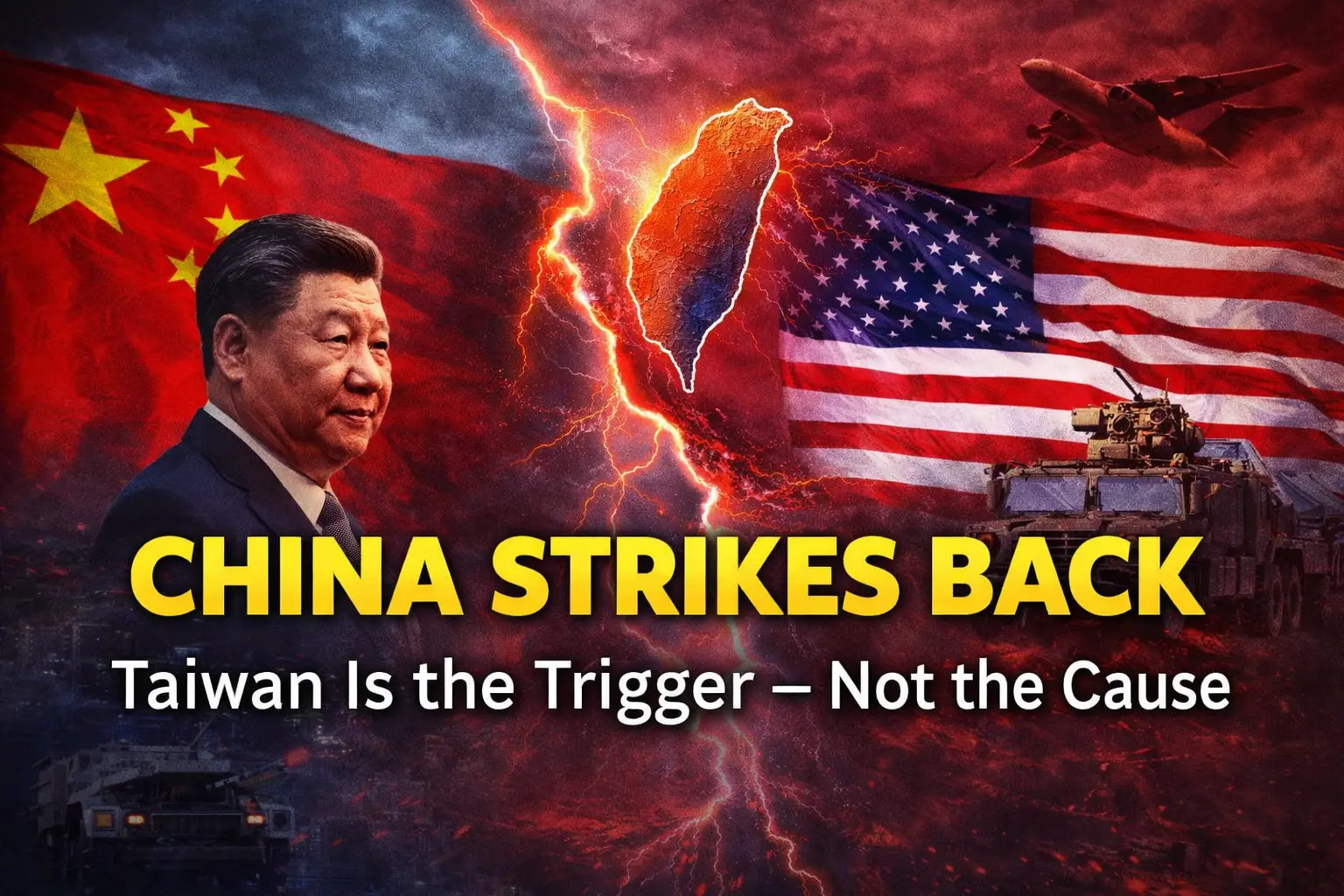
China’s decision to sanction 30 U.S. defence firms and senior executives over weapons sales to Taiwan has largely been framed as a reaction to a single arms package. That interpretation, however, is strategically incomplete.
While Taiwan remains the immediate trigger, Beijing’s move represents something deeper: a cumulative response to years of U.S. sanctions, containment policies, and technological pressure. This is not an emotional outburst. It is a calculated step in China’s evolution from a sanctions target into an active sanctions-wielding power.
In short, this is doctrine—not drama.
The Sanctions Spiral: Context Matters
For more than a decade, the United States has applied sustained pressure on China across multiple domains:
•Advanced semiconductor and AI export restrictions
•Blacklisting of Chinese defence and technology firms
•Financial and investment limitations
•Sanctions linked to Xinjiang, Hong Kong, and maritime disputes
•Expanding military partnerships around China’s periphery
Arms sales to Taiwan have become the most visible military expression of this broader strategy.
China’s sanctions, therefore, should be read not as a single-issue response, but as retaliation against an entire pressure architecture.
Why Now? Timing as Strategic Communication
Beijing’s timing reflects three deliberate objectives:
1. Reciprocity as Deterrence
China is establishing a clear precedent:
sanctions will be answered with sanctions.
This is not about damage—it is about deterrence through symmetry.
2. Domestic Signaling
On issues of sovereignty, particularly Taiwan, silence equals weakness. Responding decisively reinforces internal legitimacy and reassures domestic audiences that strategic patience does not mean passivity.
3. Legal Normalization
By invoking its Anti-Foreign Sanctions Law, China is institutionalizing retaliation. This transforms sanctions from reactive diplomacy into a codified instrument of state power, mirroring Western legal frameworks.
China is building long-term capacity, not short-term headlines.
Economic Impact: Limited but Strategically Irrelevant
Critics often argue that these sanctions are symbolic because U.S. defence firms have limited exposure to China. That observation misses the point.
In contemporary great-power rivalry:
•Message outweighs money
•Precedent outweighs profit
By targeting executives as well as firms, China introduces personal and reputational risk, escalating pressure beyond balance sheets and into boardrooms.
A Strategic Shift: China Is Changing the Rules
This episode reflects a broader transformation in Chinese behavior:
•From defensive resistance to active coercive response
•From rhetorical protest to legal-economic punishment
•From isolated reactions to systematic retaliation
Beijing is signaling that it has learned the mechanics of pressure politics—and is prepared to use them.
Why Symbolic Sanctions Still Matter
Symbolic measures are often dismissed, but they serve a critical function: rehearsal.
China’s sanctions allow Beijing to:
•Test enforcement mechanisms
•Assess international reactions
•Map corporate and executive vulnerabilities
This is policy as strategic reconnaissance.
The Executive Factor: A Quiet Escalation
Targeting individuals marks a subtle but important shift. Personal sanctions increase psychological pressure and extend consequences beyond institutional walls.
This mirrors Western practice—and confirms that China is no longer merely reacting to the system, but operating within it.
Global Implications Beyond U.S.–China Rivalry
The ripple effects extend well beyond Washington and Beijing:
•Middle powers are reassessing exposure risks
•Defence exporters are recalculating political costs
•Sanctions are increasingly viewed as standard tools, not exceptional punishments
The monopoly on economic coercion is eroding.
Conclusion: Controlled Escalation, Not Crisis
China’s sanctions are neither meaningless symbolism nor reckless escalation. They represent controlled retaliation within a maturing strategic rivalry.
Beijing is not seeking confrontation—but it is clearly preparing the legal and economic battlefield where future competition will unfold.
The era of one-sided sanctions is fading.
The age of sanctions parity has arrived.
FAQs
1. Are China’s sanctions mainly about Taiwan?
No. Taiwan is the trigger, but the sanctions reflect accumulated Chinese responses to years of U.S. technological, economic, and military pressure.
2. Do these sanctions seriously hurt U.S. defence companies?
Economically, the impact is limited. Strategically, they matter because they normalize retaliation, target executives personally, and reshape expectations.
3. What does this mean for future U.S.–China relations?
It signals a shift toward sustained legal and economic confrontation, where sanctions become routine instruments of rivalry rather than exceptional measures.