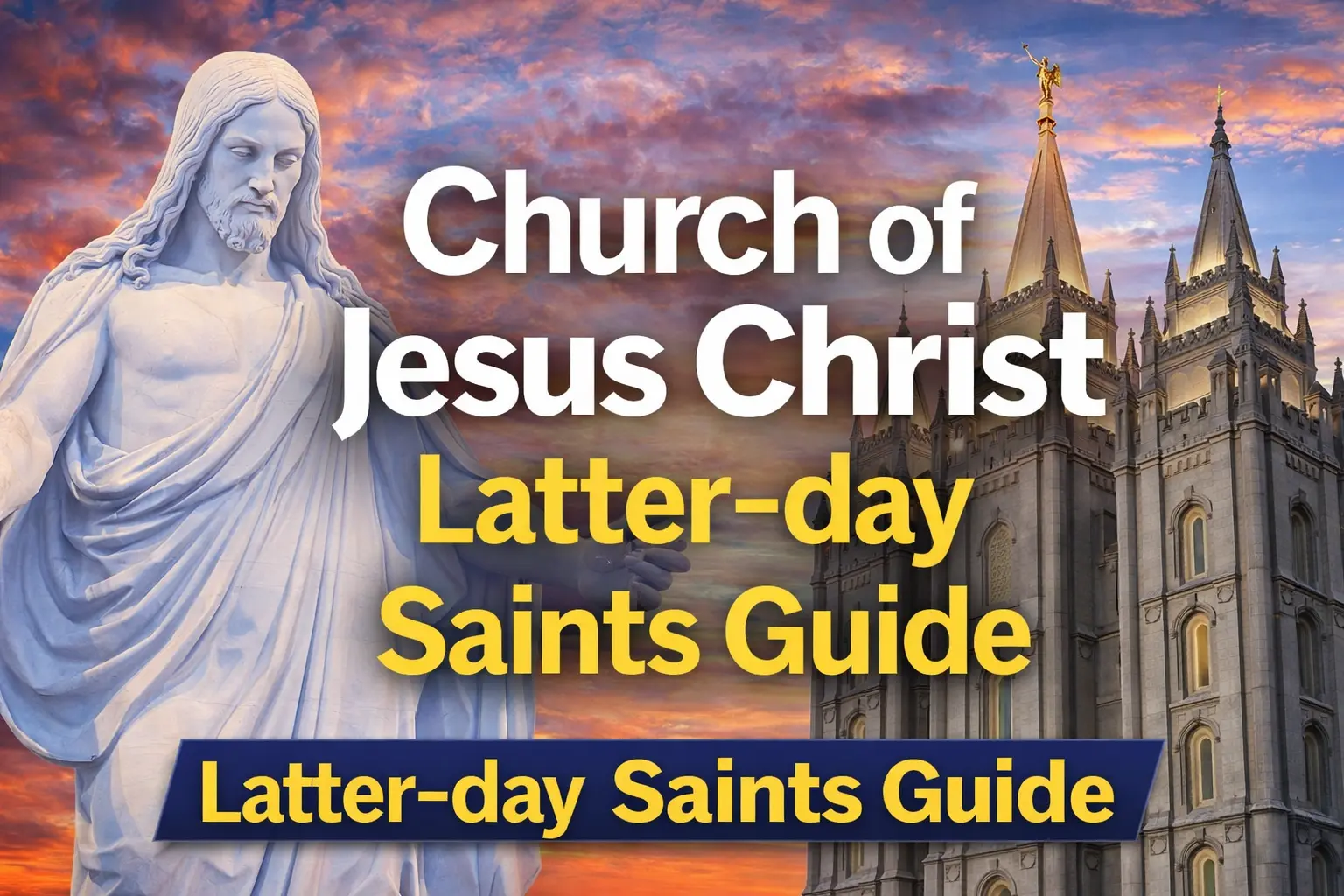

The Church of Jesus Christ of Latter-day Saints (LDS Church) is one of the fastest-growing Christian denominations in the world. Many people also call it the Mormon Church, but members prefer the full name because it focuses on Jesus Christ.
When I first started learning about the LDS Church, I noticed something interesting. People often talk about it with strong opinions either very positive or very critical. But very few actually explain what Latter-day Saints truly believe. So I decided to study it carefully and understand it from both history and doctrine.
This guide explains the history, beliefs, leadership, scriptures, and global presence of the Church in simple English.
Origins and Founder
The Church was founded on April 6, 1830, in New York by Joseph Smith. At first, it was called the Church of Christ. Later, the name became The Church of Jesus Christ of Latter-day Saints.
Joseph Smith said that God and Jesus Christ appeared to him in a vision. He taught that the original Christian Church had lost authority after the death of the early apostles and needed to be restored. This idea is known as Restorationism.
After Joseph Smith’s death in 1844, Brigham Young led many members to Utah. Today, the Church headquarters is in Salt Lake City, Utah.
Core Beliefs of the LDS Church
The LDS Church is Christian, but it is nontrinitarian. This means it does not follow the traditional Trinity doctrine in the same way Catholics or Protestants do.
Key beliefs include:
-
Salvation through Jesus Christ
-
Faith, repentance, baptism, and obedience
-
Modern-day prophets
-
Continuing revelation from God
-
Strong family values and eternal marriage
Members believe the Church president is a living prophet. As of today, leadership includes senior apostles such as Dallin H. Oaks, who serves in top church leadership.
LDS Scriptures (Standard Works)
The Church has four main sacred texts called the Standard Works:
-
The Holy Bible
-
The Book of Mormon
-
Doctrine and Covenants (D&C)
-
Pearl of Great Price
The Book of Mormon is central to LDS belief. Members believe it is another testament of Jesus Christ.
When I personally read parts of the Book of Mormon for research, I noticed that it focuses strongly on Jesus Christ, repentance, and moral living — themes common in Christianity.
Church Structure and Leadership
The LDS Church has a hierarchical structure:
-
President (Prophet)
-
Apostles
-
Area leaders
-
Stakes
-
Wards (local congregations)
Local leaders like bishops serve voluntarily. This was surprising to me — many clergy members are not paid full-time ministers. They often have regular jobs.
Global Presence and Growth
As of recent reports:
-
Over 17 million members worldwide
-
More than 30,000 congregations
-
Over 100,000 volunteer missionaries
-
200+ temples globally
Missionary work is a major part of LDS culture. Young men and women often serve missions for 18–24 months.
I have personally met LDS missionaries before. They were respectful, polite, and very structured in their approach. Whether one agrees with their theology or not, their discipline and commitment are noticeable.
Controversies and Criticism
The Church has faced criticism throughout history, especially regarding:
-
Historical claims
-
Past practice of polygamy (ended officially in 1904)
-
Differences from mainstream Christianity
-
Financial transparency
Many traditional Christian groups consider the LDS Church separate from orthodox Christianity due to doctrinal differences.
Understanding these issues requires careful research and balanced reading.
Why Understanding the LDS Church Matters
The Church of Jesus Christ of Latter-day Saints is one of the most influential religious movements that began in America. It has shaped communities, politics, culture, and global missionary work.
Whether you are researching Mormon beliefs, Christian denominations, or comparative religion, learning about the LDS Church gives deeper insight into modern Christianity.
Final Thoughts
From my research experience, I learned one important lesson: it is easy to label a group, but harder to understand them properly.
The LDS Church is structured, mission-focused, and deeply centered on its interpretation of Jesus Christ. At the same time, its theology is distinct from Catholic, Orthodox, and Protestant traditions.
If you want to truly understand religion in the modern world, studying the Church of Jesus Christ of Latter-day Saints is essential.