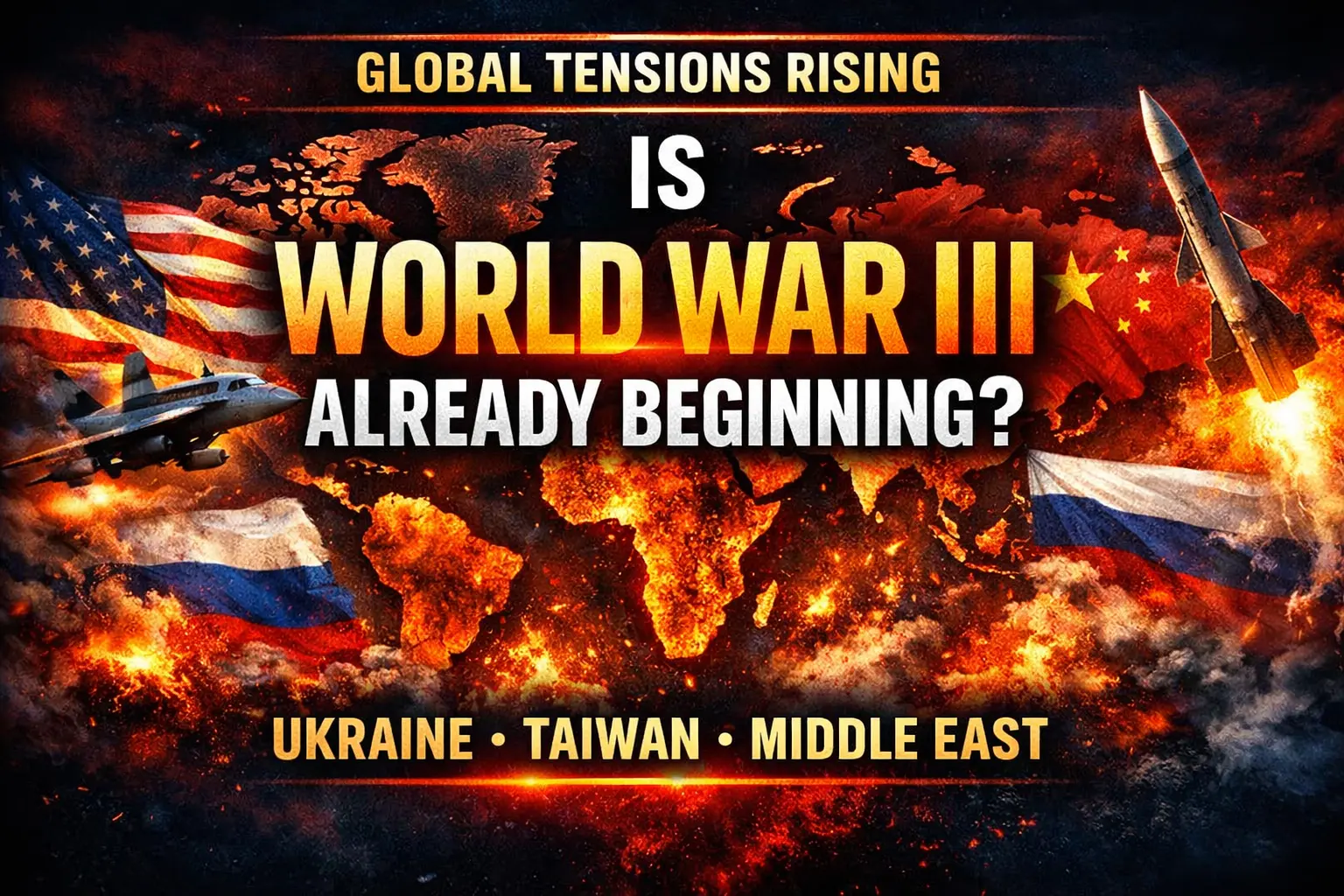

Rising Geopolitical Tensions and the Warning by Ben Hodges
For many people around the world, the idea of World War III still feels like a distant or dramatic scenario reserved for history books or movies. Yet, according to several military strategists and geopolitical analysts, the world may already be experiencing the early stages of a new global strategic confrontation.
One of the voices raising this concern is Lt. Gen. Ben Hodges, former commander of U.S. Army Europe. In a recent discussion on global security, Hodges warned that the current international situation—marked by multiple simultaneous conflicts—could eventually be viewed by historians as the beginning phase of a wider global war.
His warning reflects a growing fear among experts that today’s crises are not isolated events but part of a larger geopolitical struggle between major powers.
A World of Multiple Flashpoints
Unlike the clearly defined alliances and battle lines of the First and Second World Wars, today’s global tensions are scattered across several regions at once. These geopolitical flashpoints are creating a dangerous environment where a regional conflict could quickly escalate into a broader confrontation.
The Russia–Ukraine War
The ongoing war between Russia and Ukraine has become the most significant military conflict in Europe since World War II.
What began as a regional war has gradually transformed into a wider strategic confrontation between Russia and the Western alliance. Western nations, led by the United States, have supplied Ukraine with intelligence, financial support, and advanced weapon systems.
From Moscow’s perspective, this conflict represents a struggle against Western expansion and NATO influence near Russia’s borders.
Rising Tensions Around Taiwan
Another major geopolitical hotspot lies in East Asia. China has steadily expanded its military power and continues to assert its claim over Taiwan.
Military exercises, naval patrols, and air incursions around Taiwan have increased significantly in recent years. Many global security experts believe that any military crisis in the Taiwan Strait could quickly draw in major powers such as the United States and its regional allies.
Such a confrontation would have enormous consequences for global trade, security, and the balance of power in the Indo-Pacific region.
The Middle East: A Persistent Strategic Volcano
The Middle East geopolitical crisis continues to be another major source of global instability. Tensions involving Iran, Israel, and Western powers remain dangerously high.
Iran’s missile development, regional alliances, and strategic rivalry with Israel have turned the region into a constant security flashpoint.
Any major confrontation here could disrupt global energy markets and potentially trigger a wider regional war involving several countries.
A New Type of Global Conflict
Modern warfare is evolving. Many experts believe that if a new world war emerges, it will not begin with a single dramatic declaration.
Instead, it may develop gradually through interconnected crises involving:
•Cyber warfare
•Economic sanctions and financial warfare
•Proxy conflicts between major powers
•Regional military confrontations
•Information and psychological warfare
This type of hybrid global conflict would make it harder for the public to recognize when a global war has actually begun.
Actions and Concerns of Major Countries
The warning raised by General Hodges also reflects how several major countries are already adjusting their strategies in response to growing global instability.
These actions reveal how the international system is entering a period of intense strategic competition.
United States: Strengthening Global Alliances
The United States global strategy currently focuses on strengthening alliances across Europe and Asia.
Washington continues to provide military assistance to Ukraine while also expanding defense cooperation in the Indo-Pacific region with countries such as Japan, South Korea, and the Philippines.
These moves are designed to deter potential aggression and maintain the existing international security architecture.
Russia: Challenging Western Influence
Russia sees the current global environment as an opportunity to challenge Western dominance.
For Moscow, the war in Ukraine is not just about territory—it is part of a broader effort to reshape the global geopolitical order and push back against NATO expansion.
Russia is also deepening strategic ties with countries that share concerns about Western influence.
China: Preparing for Long-Term Strategic Competition
China has adopted a strategy of long-term geopolitical patience.
While avoiding direct confrontation with the West, Beijing is rapidly modernizing its military, expanding naval power, and strengthening economic influence through global initiatives.
China’s leadership believes the coming decades will define the future balance of power in the world.
Iran: Expanding Regional Influence
Iran continues to build strategic depth across the Middle East through alliances and military partnerships.
Tehran views its missile program and regional influence as essential tools to counter pressure from Israel and Western powers.
These developments make Iran a key player in the Middle East security landscape.
Europe: Awakening After Decades of Peace
For many European countries, the Russia–Ukraine war has been a wake-up call.
Nations such as Germany, France, and Poland have dramatically increased defense spending and begun rebuilding their military capabilities.
Europe is once again preparing for the possibility of a major conflict on the continent.
Indo-Pacific Nations: Balancing Power
Countries across the Indo-Pacific region are also strengthening their defense posture.
Nations such as India, Australia, and Vietnam are modernizing their militaries while carefully balancing relations between China and the United States.
Their goal is to maintain regional stability while avoiding direct confrontation between major powers.
Conclusion
The warning from Ben Hodges reflects a growing reality: the international system is under increasing strain.
From the Russia–Ukraine war to tensions in the Taiwan Strait and instability in the Middle East, multiple geopolitical crises are unfolding at the same time.
While a full-scale World War III has not yet begun, the current global environment suggests that the world has entered a period of intense strategic rivalry and uncertainty.
Whether this rivalry evolves into a larger global conflict—or is contained through diplomacy—will likely define the future of international security in the coming decades.