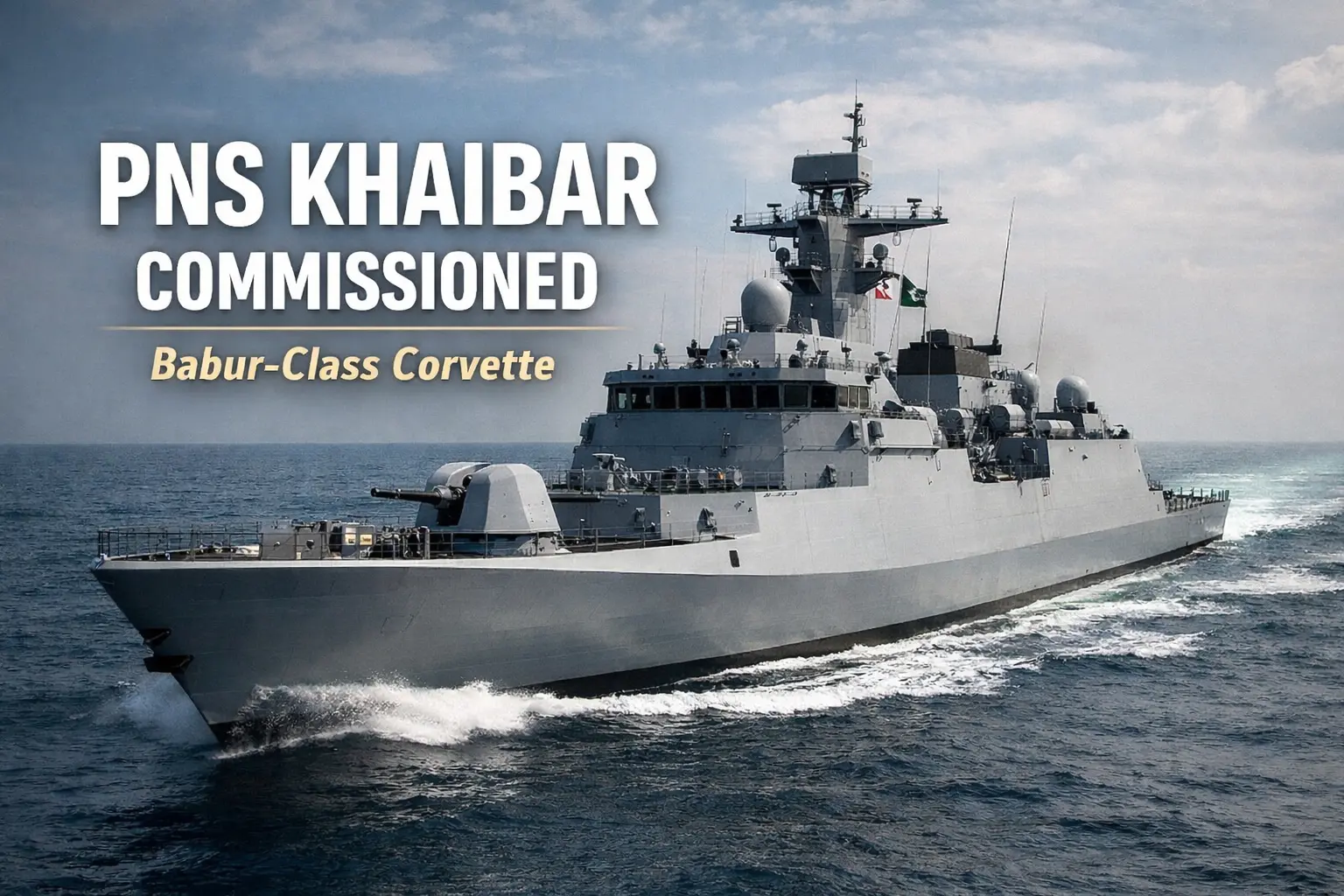

When a warship is commissioned, the ceremony is often symbolic. But in the case of PNS Khaibar, symbolism is only part of the story. Its induction into the Pakistan Navy reflects a deliberate and carefully planned shift in how Pakistan intends to secure its maritime interests in an increasingly contested region.
This is not about adding another hull to the fleet. It is about adapting to modern naval realities—where stealth, sensors, and information dominance matter as much as missiles and guns.
2. Background: Babur-Class Corvette Program
The Babur-class did not emerge overnight. It was the result of years of operational experience, budgetary realities, and hard lessons drawn from regional naval developments. Pakistan Navy needed a platform that could do more than patrol the coastline but did not impose the financial and operational burden of large surface combatants.
Corvettes of this class offer a balanced answer: capable enough to fight, flexible enough to patrol, and affordable enough to operate regularly. In practical terms, they allow the navy to maintain presence without overstretching resources.
3. PNS Khaibar – Ship Identity and Naming
Naming a frontline warship Khaibar is not accidental. The name carries weight—historical, psychological, and symbolic. It signals resolve and forward posture, traits expected from a ship that will likely spend much of its service life deployed rather than berthed.
As the fourth ship in the class, PNS Khaibar benefits from refinement. Design tweaks, systems integration improvements, and crew training methodologies have all matured by the time this vessel entered service.
4. Design Philosophy and Stealth Features
At first glance, PNS Khaibar’s angular lines may not seem dramatic. But those shapes are carefully engineered. Reduced radar visibility, controlled heat signatures, and quieter acoustic performance all serve a single purpose: survival.
In modern naval warfare, being seen often means being targeted. By making detection harder, the ship buys time—time to maneuver, time to engage, or time to withdraw.
5. Combat Systems and Sensors
5.1 Combat Management System (CMS)
The ship’s combat management system acts as its brain. It collects data from multiple sensors, filters threats, and helps commanders make rapid decisions.
5.2 Radar and Surveillance Suite
The radar suite provides early warning and precise tracking, essential in dense maritime environments like the Arabian Sea.
5.3 Electronic Warfare (EW)
Electronic warfare capabilities allow the ship to detect and disrupt hostile sensors, reducing the effectiveness of incoming threats.
6. Weapons and Armament
6.1 Surface Warfare
Anti-ship missiles and a modern naval gun give PNS Khaibar credible offensive reach against surface threats.
6.2 Air Defense
Layered air defense systems protect the ship from aircraft, drones, and missiles during independent or escort operations.
6.3 Anti-Submarine Warfare (ASW)
Sonar and torpedo systems enable the corvette to counter underwater threats near vital sea routes.
7. Aviation Capability
The helicopter deck and hangar extend the ship’s operational reach, enhancing surveillance, targeting, and anti-submarine warfare.
8. Operational Roles
PNS Khaibar is designed for real-world naval duties: escort missions, maritime security patrols, protection of sea lanes, and participation in multinational operations.
9. Strategic Importance in Regional Context
The induction of platforms like PNS Khaibar strengthens deterrence in the Arabian Sea without pushing Pakistan into an unsustainable naval competition.
10. Babur-Class vs Regional Naval Platforms
Rather than prioritizing size, the Babur-class emphasizes efficiency, stealth, and modern combat systems—allowing smaller ships to challenge larger adversaries under the right conditions.
11. Indigenous Capability and Industrial Growth
Each new ship adds experience in integration, maintenance, and operations, gradually strengthening domestic naval capability.
12. Doctrinal Shift: From Coastal Defense to Sea Control
PNS Khaibar reflects a broader shift toward engaging threats farther from the coastline, improving early warning and response options.
13. Challenges and Limitations
Corvettes have limits in endurance and payload, making coordination with other naval and air assets essential.
14. Future Outlook
As more Babur-class ships enter service, their combined impact will enhance fleet coherence, flexibility, and resilience.
15. Conclusion
The commissioning of PNS Khaibar represents a strategic decision rooted in realism. It signals Pakistan Navy’s intent to maintain presence, protect trade routes, and deter conflict through balanced and sustainable maritime power.
Frequently Asked Questions (FAQs)
What role will PNS Khaibar play in Pakistan Navy’s fleet?
PNS Khaibar is intended for frontline service. It will routinely conduct patrols, escort duties, and maritime security operations rather than remaining limited to ceremonial or secondary roles.
Why is the Babur-class corvette important for Pakistan Navy?
The Babur-class offers a practical mix of modern capability and affordability. It allows Pakistan Navy to remain operationally active across a wide area without over-reliance on large surface combatants.
Does PNS Khaibar change the naval balance in the Arabian Sea?
No single ship alters the balance on its own. However, vessels like PNS Khaibar collectively strengthen surveillance, deterrence, and response options, raising the cost of hostile action.
How does PNS Khaibar fit into Pakistan Navy’s long-term strategy?
PNS Khaibar supports a shift toward sustained sea presence and early threat engagement, integrating with submarines and air assets to protect vital sea lanes and national interests.