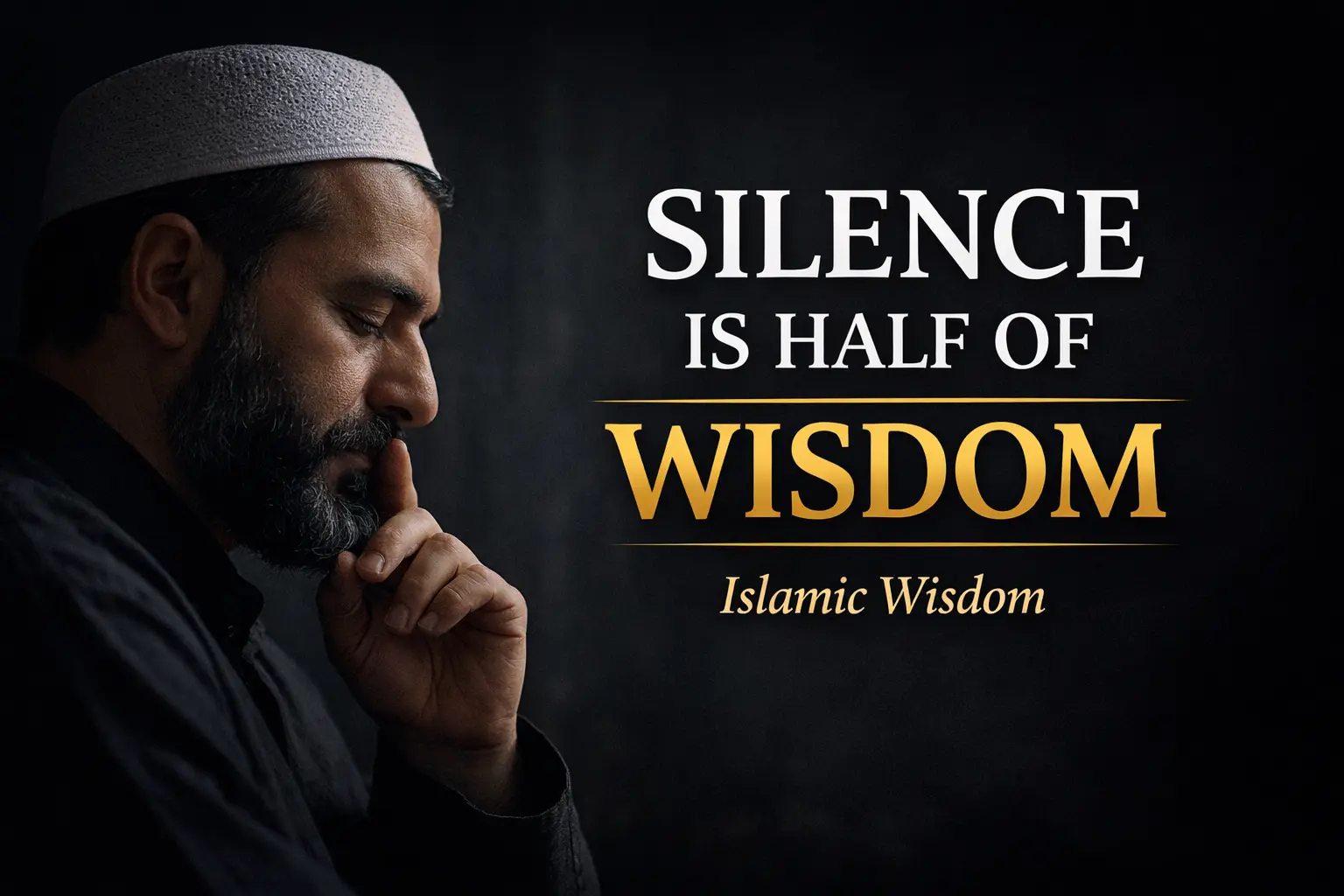

Introduction: Why Silence Is Considered Half of Wisdom
In a world dominated by noise, instant reactions, and emotional expression, silence is often misunderstood. Many people assume that remaining quiet reflects weakness or fear. However, across civilizations, generations, and divine guidance, silence has consistently been regarded as half of wisdom.
Our elders used to say:
“To avoid all circumstances of insult, the best way is to remain silent.”
This simple yet profound statement carries deep psychological, social, and spiritual meaning. Silence protects dignity, prevents regret, and reflects maturity of character.
The Hidden Damage of Uncontrolled Speech
Most conflicts do not begin with actions; they begin with words. A single careless sentence—spoken in anger or ego—can escalate a minor disagreement into lasting damage.
Uncontrolled speech often leads to:
•Loss of respect
•Public embarrassment
•Broken relationships
•Lingering regret
Islam strongly warns against careless words, as explained in our detailed discussion on
👉 Ethics of Speech in Islam: Guarding the Tongue from Harm
Silence, by contrast, creates space for reflection and restraint.
Islamic Teachings on Silence and Guarding the Tongue
Islam places immense importance on controlling speech. The Prophet Muhammad ﷺ said:
“Whoever believes in Allah and the Last Day should speak good or remain silent.”
(Bukhari & Muslim)
This Hadith establishes silence as an act of faith when speech does not bring goodness or truth. Islam discourages unnecessary argument, verbal aggression, and ego-driven debate.
Careless speech also leads to social harm such as backbiting, which is discussed in detail here:
👉 Backbiting (Gheebah) in Islam and Its Social Damage
Hazrat Ali (RA) on Silence and Wisdom
Hazrat Ali (RA), renowned for wisdom and intellectual depth, repeatedly emphasized the value of silence:
“Silence is the best reply to a fool.”
“I remained silent until silence itself spoke in my defense.”
“Nothing brings regret like speech, and nothing brings safety like silence.”
His sayings align with other reflections found in
👉 Wisdom Sayings of Hazrat Ali (RA) Explained
Hazrat Ali (RA) understood that silence often exposes falsehood more effectively than argument.
Silence as the Best Protection from Insult
Insults thrive on reaction. When answered emotionally, they escalate. When met with silence, they collapse.
Remaining silent:
•Preserves dignity
•Prevents escalation
•Disarms provocation
•Maintains self-respect
This is why unnecessary arguments often lead to humiliation, as discussed in
👉 Why Arguing with Fools Destroys Dignity
Psychological Benefits of Silence
Modern psychology confirms what Islamic wisdom taught centuries ago: people regret angry words far more than silence maintained with patience.
Silence strengthens:
•Emotional intelligence
•Decision-making
•Mental clarity
•Self-control
The link between silence, patience, and emotional discipline is further explained in
👉 Power of Sabr (Patience) in Islamic Character Building
Is Silence Weakness? Islamic Balance Explained
Islam does not promote silence at the cost of truth or justice. Instead, it teaches balance.
•Speak when silence enables injustice
•Remain silent when speech leads to insult, arrogance, or regret
This balanced approach to conflict is explained in
👉 Islamic Approach to Conflict Resolution with Patience
True wisdom lies in knowing when to speak and when to remain silent.
Silence in the Modern Digital Age
Social media rewards loud opinions and instant reactions. Calmness is often mistaken for passivity.
History shows the opposite. Great leaders and scholars were known not for constant speech, but for measured words and thoughtful silence. Silence allowed them to observe, reflect, and act with clarity.
The Spiritual Power of Silence in Islam
Silence nurtures:
•Humility
•Inner peace
•Self-accountability
•A deeper connection with Allah
Islamic scholars, including Maulana Wahiduddin Khan, emphasized silence as a gateway to spiritual clarity. Reflection (Tafakkur) plays a key role here:
👉 Tafakkur: The Islamic Practice of Deep Reflection
Frequently Asked Questions About Silence in Islam
Why is silence considered half of wisdom in Islam?
Silence protects a person from regret, insult, and unnecessary conflict. Islam teaches that speech should bring goodness; otherwise, silence reflects wisdom and faith.
What did Hazrat Ali (RA) say about silence?
Hazrat Ali (RA) taught that silence is the best reply to a fool and that safety lies in restraint rather than reckless speech.
Is remaining silent a sign of weakness?
No. Islam considers silence a strength when speech leads to harm. However, Islam also commands speaking up for truth and justice when required.
How does silence help avoid insult and humiliation?
Silence deprives provocation of power. Without reaction, insults lose their impact and dignity remains intact.
Conclusion: Silence Is Strength, Not Absence
Silence does not mean having nothing to say. It means understanding the weight of words.
In the wisdom of elders, the teachings of Islam, and the guidance of Hazrat Ali (RA), silence stands as:
•A shield of dignity
•A sign of intelligence
•A mark of spiritual maturity
In a world obsessed with speaking, choosing silence at the right time is true wisdom.