
Peace in Afghanistan is not a distant political idea. It is a daily economic requirement for millions of ordinary people across the region. When terrorist groups operating from Afghan soil prevent peace from taking root, the consequences are felt far beyond security concerns. Despite exercising authority, the Taliban government has so far failed to fully control these elements. The result is persistent instability that repeatedly leads to border closures, trade disruptions, and economic losses on both sides of the border.
When peace does not prevail, borders do not remain open for long.
Instability Turns Borders into Barriers
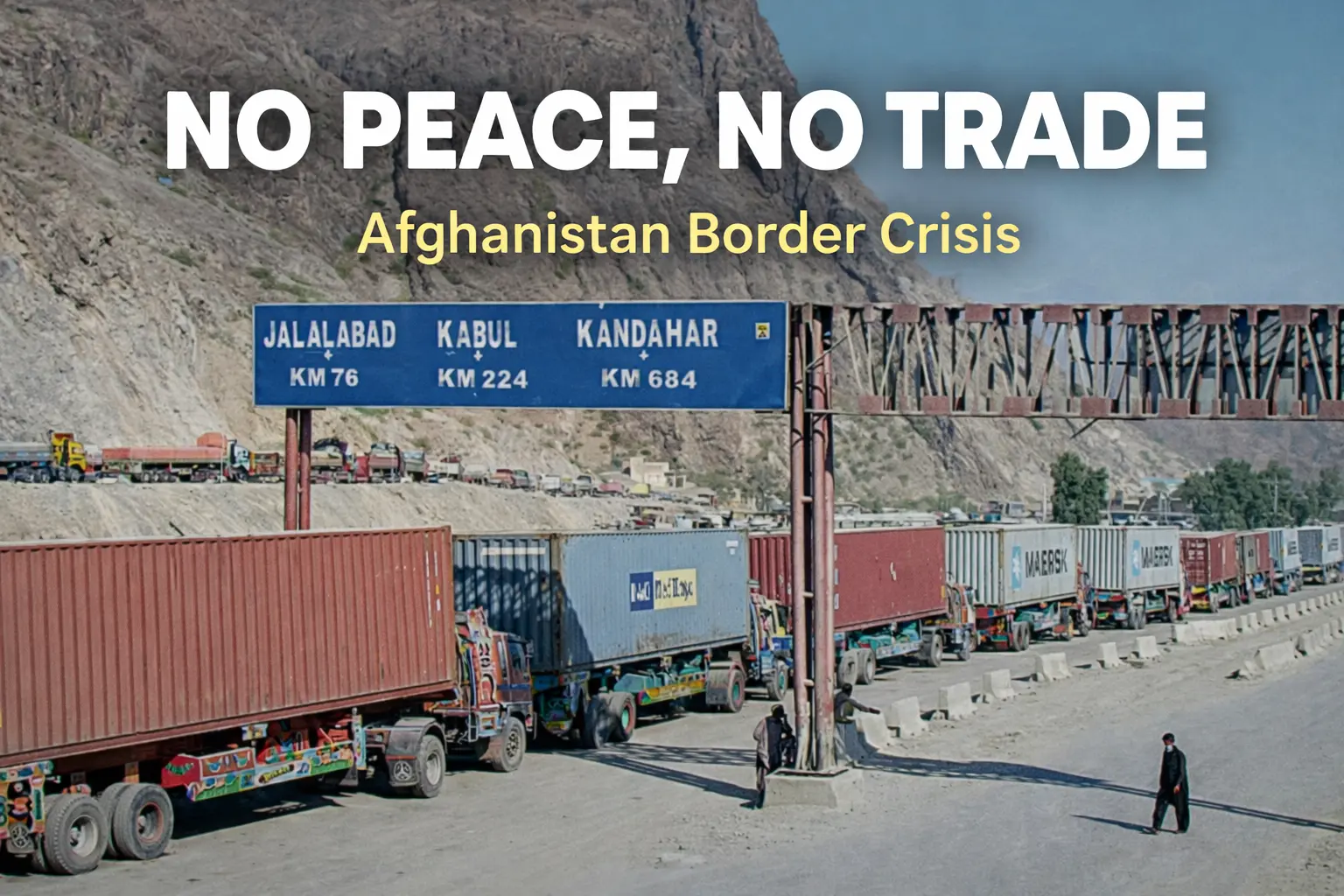
In regions affected by insecurity, governments have limited options. Even a single serious incident can force border restrictions. Once crossings close, transporters stop moving, traders withdraw their goods, and supply chains collapse almost overnight.
This pattern has repeated itself whenever violence flares in Afghanistan. Trade does not slow gradually—it comes to an abrupt halt.
Border Closures Hurt Ordinary People First
Official statements often describe border closures in technical or diplomatic terms, but their impact is deeply human. When trade stops, it is not policymakers who feel the immediate shock. It is drivers waiting at closed gates, shopkeepers watching customers disappear, and laborers losing daily wages.
Perishable goods spoil within days. Small traders face losses they cannot absorb. Border communities that depend on daily cross-border movement suddenly find themselves without income. Families divided across the border are cut off, sometimes for weeks.
Food Trade Disruption and Its Cost for Afghanistan
For many years, Afghanistan relied heavily on Pakistan for essential food items. Wheat, maize, corn, and other staples moved quickly and cheaply through short land routes. This trade kept prices relatively stable and ensured steady availability in Afghan markets.
When borders close, Afghanistan may still manage to import these commodities from India or Iran. However, this shift comes at a high cost. Longer distances, sea transport, port charges, and delays significantly increase prices. What was once affordable becomes expensive.
In the end, it is the Afghan consumer who pays more—not because food is unavailable, but because peace is absent.
Pakistan’s Market Also Feels the Shock
The economic impact of disrupted trade is not one-sided. Pakistan also loses important advantages when borders remain closed. Due to differences in climate and harvest cycles, Afghan fruits and vegetables traditionally reached Pakistani markets earlier than local produce. This early arrival helped fill seasonal gaps and kept prices balanced.
Dry fruits such as almonds, walnuts, and raisins, along with Afghan spices and traditional masala, have long been part of Pakistani markets. When these supplies disappear, shortages emerge and prices rise. Consumers are forced to turn to more expensive or lower-quality alternatives.
This trade developed naturally over decades, shaped by geography and demand—not politics.
Missing Traders, Falling Prices, Suffering Farmers
Another serious but less discussed impact is the disappearance of Afghan traders who regularly purchased fruits and vegetables from Pakistani markets. These buyers created demand, especially during peak harvest seasons.
With their absence, supply now exceeds demand in local markets. As a result, prices of many agricultural products have dropped sharply. Farmers, after investing heavily in seeds, fertilizer, labor, and transport, are forced to sell at prices that barely cover their costs.
The ultimate sufferer is the farmer. This silent loss damages rural incomes, discourages future production, and threatens long-term agricultural sustainability.
Terrorism’s Real Damage Goes Beyond Violence
Terrorist groups understand that instability weakens economies. By preventing peace, they do more than carry out attacks—they disrupt trade, create mistrust between neighboring countries, and block regional economic cooperation.
This is how terrorism slowly drains societies: not only through fear, but through economic exhaustion.
Governance and Responsibility
Holding authority is not the same as delivering stability. If militant groups continue to operate freely, borders will remain unpredictable and trade will remain fragile. No amount of diplomatic engagement can compensate for the absence of effective security control.
Peace must be enforced on the ground if economic normalcy is to return.
Peace Is the Only Sustainable Trade Policy
There is no alternative route, supplier, or agreement that can replace peace. Open borders depend on stability. Markets survive on predictability. Livelihoods grow only where security exists.
Peace keeps trade alive—and trade, in turn, supports peace.
Conclusion: Ordinary People Pay the Price of Instability
When peace fails in Afghanistan, borders close. When borders close, economies on both sides suffer. The heaviest burden is carried not by governments, but by farmers, traders, laborers, and families trying to earn a living.
Until terrorism is decisively controlled and peace becomes durable, trade will remain fragile—and regional prosperity will remain out of reach.