
America’s Strategic Radar and the Return of the Jungle Rule
For decades, the world was told that power politics had evolved. Wars of conquest were supposedly behind us. International law, institutions, and a “rules-based order” were meant to protect the sovereignty of nations—especially the weaker ones.
But if we look honestly at global events today, that promise rings hollow.
What we are seeing is not random. It is not chaos. It is a pattern—carefully applied, quietly executed, and increasingly normalized. Power has not disappeared; it has simply changed form.
And in that transformation, the jungle rule is back.
Not with tanks and invasions, but with sanctions, financial pressure, intelligence operations, and political engineering. Sovereignty is no longer violated loudly. It is slowly suffocated.
Power Has Changed — Not Disappeared
Modern power no longer arrives with armies crossing borders. Instead, it shows up in subtler, more sophisticated ways.
In this pattern, you don’t see invasions.
You see sanctions that cripple economies.
You see legal and financial isolation.
You see currency collapse and inflation.
You see intelligence-driven pressure.
You see governments gradually delegitimized on the global stage.
Each step appears technical, even lawful. But together, they form a system that can break a country without firing a single shot.
The goal is no longer occupation.
The goal is control without responsibility.
That is the modern face of the jungle rule.
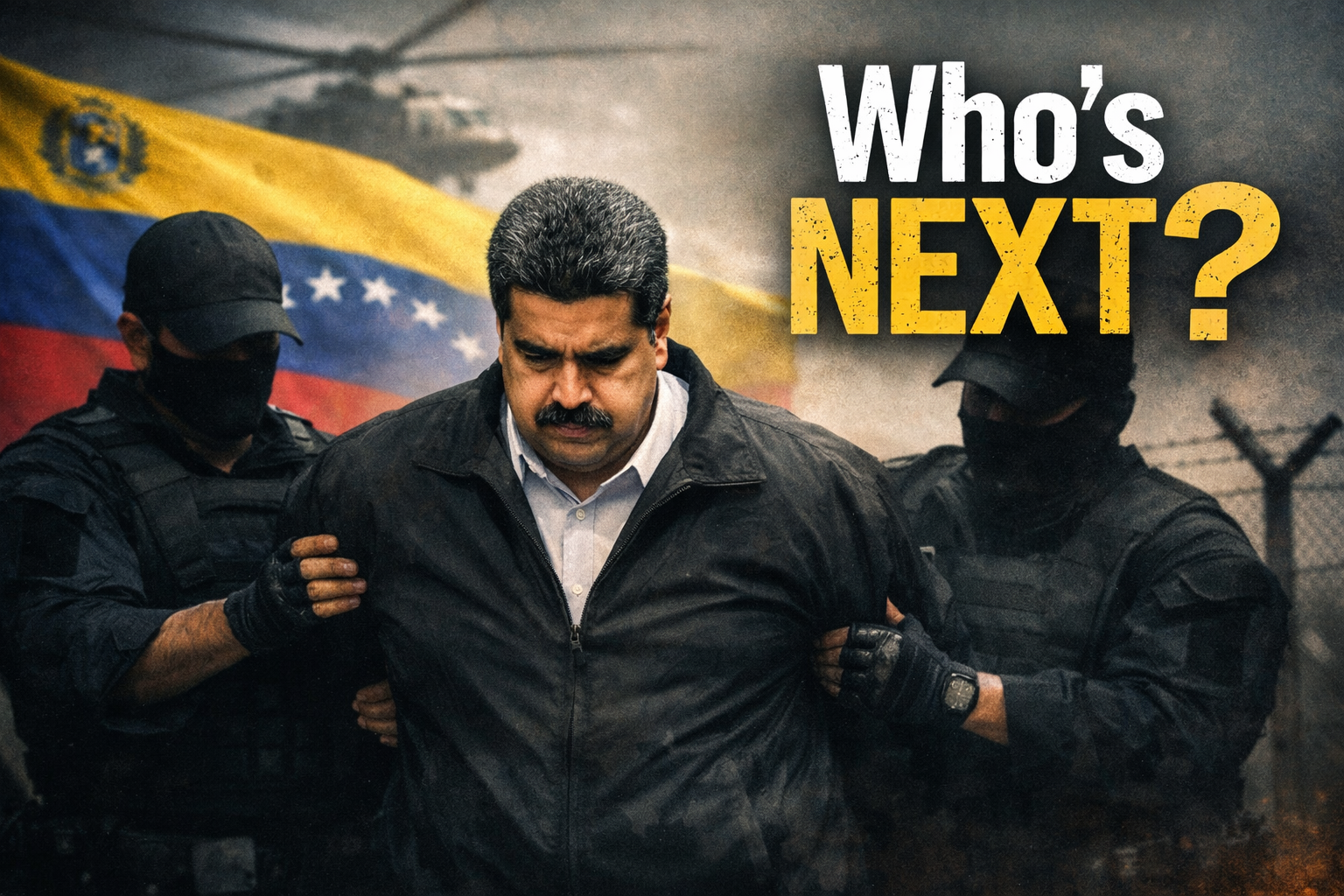
Venezuela: A Warning the World Ignored
Venezuela is often discussed as a domestic failure—poor governance, economic mismanagement, political division. Those factors exist, but they do not explain the whole story.
Venezuela is better understood as a case study.
Pressure did not begin with invasion. It began with energy sanctions. Oil revenues collapsed. Currency value imploded. Daily life became unbearable for ordinary citizens. Political narratives hardened, and international recognition was selectively withdrawn.
As institutions weakened, external pressure intensified—parallel leadership structures, diplomatic isolation, and covert destabilization.
No foreign army occupied Caracas.
Yet Venezuelan sovereignty steadily eroded.
This is how modern coercion works.
America’s Strategic Radar: Why These Countries Matter
The countries facing similar pressure today are not chosen by accident. They share common traits that make them strategically valuable in a competitive global system.
1. Greenland: Rare Earths and Arctic Power
Greenland’s importance goes far beyond ice and geography.
It holds rare earth minerals critical for:
•Advanced weapons
•Electric vehicles
•Renewable energy technology
•Semiconductors
As the Arctic opens due to climate change, Greenland’s location between North America and Europe makes it central to future military and trade routes.
2. Iran: Energy and Global Chokepoints
Iran sits next to the Strait of Hormuz, through which a significant portion of the world’s oil flows.
It possesses:
•Massive oil reserves
•Enormous natural gas fields
•Regional influence across the Middle East
Pressure here isn’t about territory—it’s about neutralizing leverage.
3. Guyana: Oil Changes Everything
Until recently, Guyana barely appeared on global strategic maps. That changed overnight with major offshore oil discoveries.
Now, Guyana represents:
•A new energy frontier
•Strategic proximity to Venezuela
•Influence in the Western Hemisphere
Energy alone is enough to attract attention.
4. Nigeria: Population, Oil, and Minerals
Nigeria is Africa’s most populous country and one of its most resource-rich.
It holds:
•Large oil and gas reserves
•Minerals like lithium, tin, and columbite
•A massive labor and consumer market
Debt, insecurity, and political fragility make leverage easier to apply.
5. Angola: Oil Wealth, Debt Pressure
Angola is energy-rich but financially vulnerable.
Its strategic value lies in:
•Oil and gas exports
•Interest in critical minerals
•Heavy dependence on external financing
This combination places it squarely on the strategic radar.
6. Iraq: Influence Without Occupation
Iraq shows how control has evolved.
Despite ending large-scale occupation, influence continues through:
•Energy contracts
•Security arrangements
•Political mediation
Oil remains central—but power is exercised quietly.
7. Kazakhstan: Uranium and Eurasian Balance
Kazakhstan is one of the world’s largest producers of uranium, essential for nuclear energy and defense.
It also serves as:
•A bridge between Russia and China
•A key energy and transport corridor
In a multipolar world, such positions are never neutral.
8. Mozambique: Gas and the Indian Ocean
Mozambique has discovered vast natural gas reserves, especially offshore.
Its importance includes:
•Future global gas supply
•Strategic Indian Ocean access
•Internal insurgency that invites “stabilization” narratives
Resources plus instability often trigger external involvement.
A Clear Pattern Emerges
Different continents. Different cultures. Same outcome.
These countries:
•Sit on critical resources
•Occupy strategic geography
•Exist within competing power systems
They are not invaded.
They are pressured, conditioned, and reshaped.
Sovereignty in Name Only
International law still exists—but its application is selective.
Sanctions bypass consensus.
Legal tools become political weapons.
Financial systems become instruments of coercion.
Sovereignty survives on paper, but not always in reality.
This is not chaos. It is managed dominance.
Power Without Accountability
The most dangerous aspect of this system is that no one is held responsible.
Economic suffering is blamed on local leadership.
Political unrest is labeled “organic.”
External influence remains invisible.
Yet outcomes are clearly engineered.
This is power without fingerprints.
Conclusion: The Jungle Rule Returns
Venezuela was not the beginning—and it will not be the end.
The world is shifting from law to leverage, from rules to power, from sovereignty to conditional autonomy.
Modern empires no longer invade.
They apply pressure.
So the question we must ask is simple—and unsettling:
After Venezuela, who is next on America’s strategic radar?
Because when leverage replaces law and power replaces principle, one truth becomes impossible to deny:
The jungle rule is back.